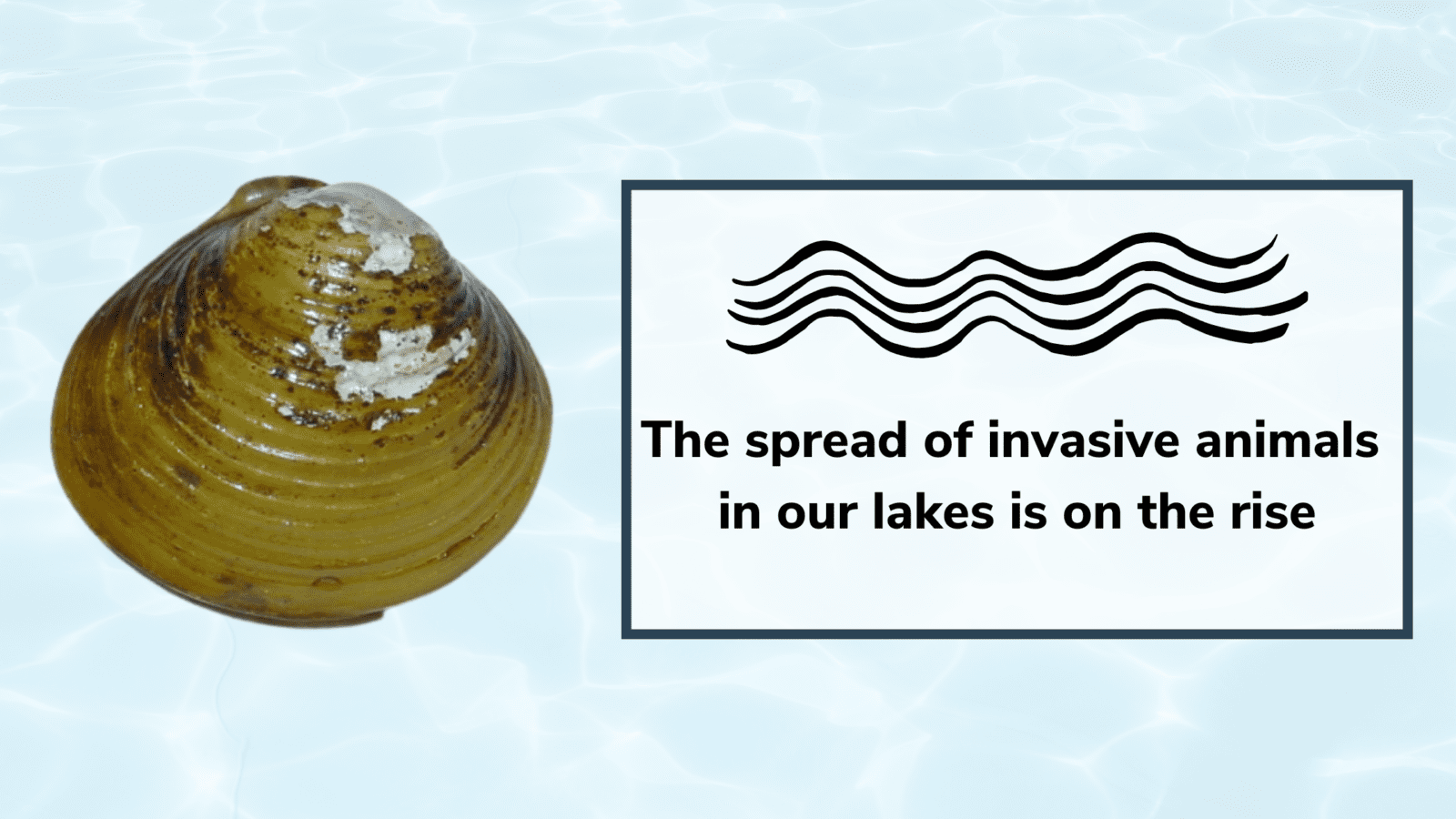
Our lakes are home to many plants and animals that are good for the lake. But, some species are harmful to our lakes. These are invasive species.
Approximately 90 lakes and rivers in New Hampshire are infested with invasive species, with some waterbodies plagued with up to six different invasive species.
Invasive species are organisms that thrive in an area where they do not evolve naturally and cause harm to the environment, economy, or people.
They primarily spread from lake to lake by traveling on boats, trailers, and recreational gear that needs to be adequately cleaned, drained, and dried between waterbodies. Large areas of invasive plants in a lake make swimming and boating difficult and dangerous. They are expensive to control and nearly impossible to get rid of. They also reduce shoreline property values.
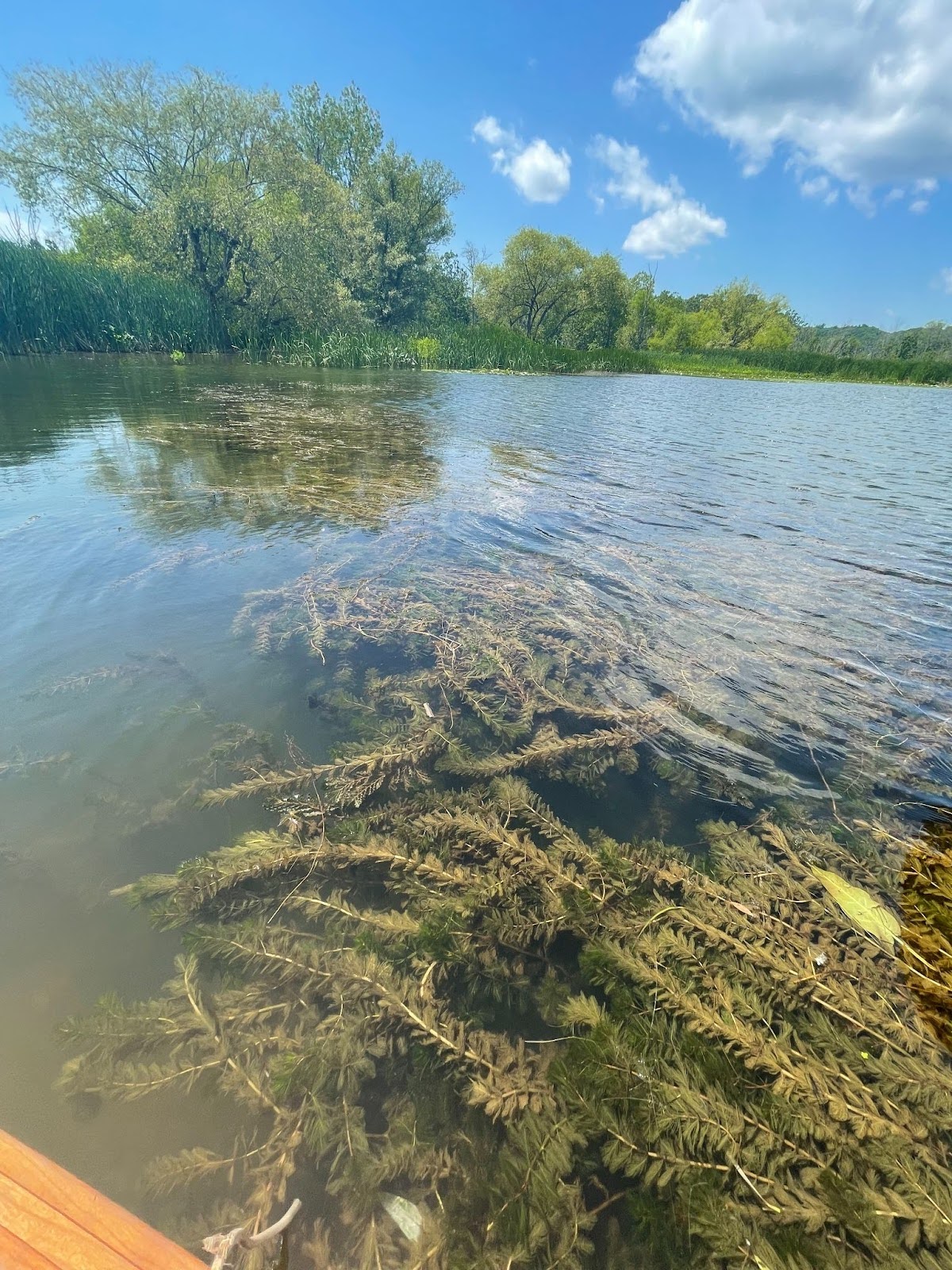
The invasive plant variable milfoil was discovered in New Hampshire in 1965. The spread of these plants in New Hampshire has slowed thanks to the education and prevention efforts of our Lake Host Program. And it is against the law to sell, move, grow, or bring in specific plants and animals that threaten our lakes.
However, despite these laws and education efforts, invasive animals in our lakes are increasing. Unfortunately, no management options are available in New Hampshire to control these animal infestations in our lakes.
Prevention Initiatives
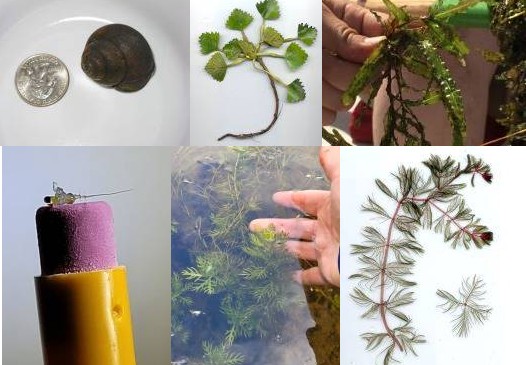
Learn What to Look For
To spot an infestation, look for significant changes in plant growth and unfamiliar plants and animals. Aquatic invasive plants often grow in large, dense clumps. Depending on the plant, these clumps can be floating mats of vegetation or below the water’s surface. Invasive plants typically prefer areas of a waterbody where sunlight reaches the bottom, and where currents are slow.
Learn more about the individual species found in New Hampshire.
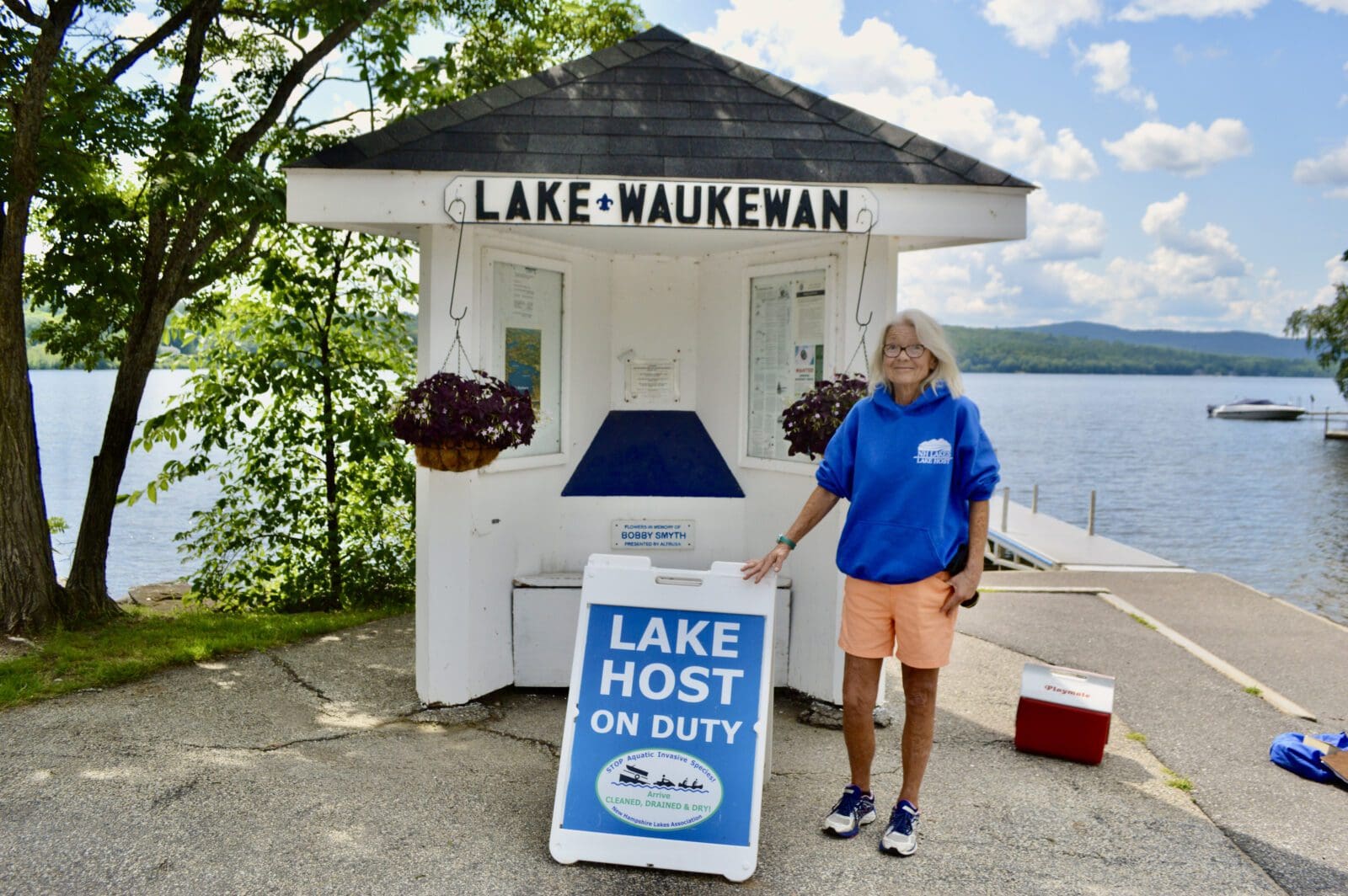
Clean water, healthy wildlife, and stable property values depend on a healthy lake free of invasive plants and animals. The NH LAKES Lake Host Program is the first line of defense!
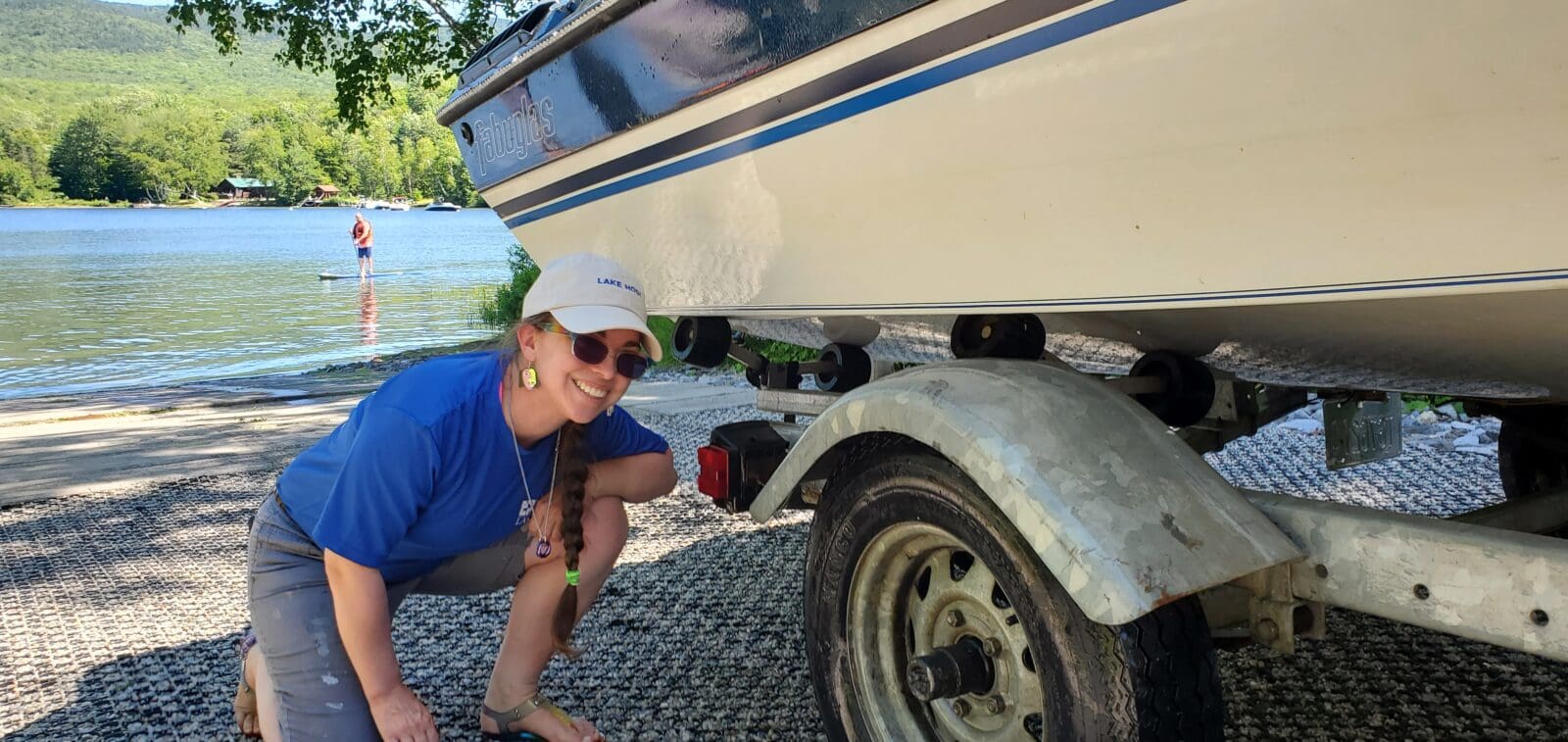
Lake Hosts offer free complimentary boat inspections and teach boaters about the Clean, Drain, and Dry method. Learn how to use this method to prevent the spread of aquatic invasive species at the lakes you love.
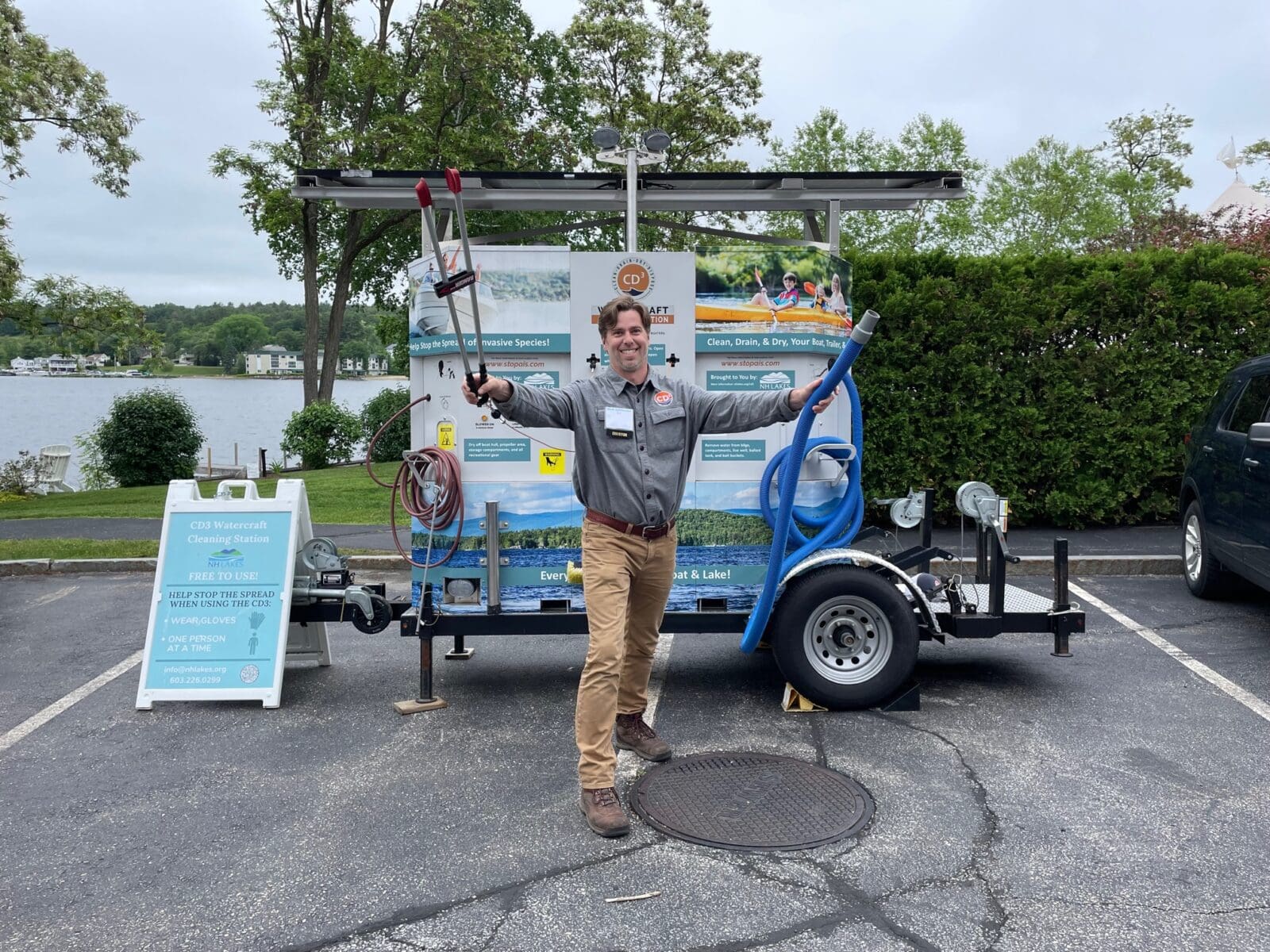
Our mobile, solar-powered cleaning unit is visiting public boat ramps throughout the state, helping boaters prevent the spread of invasive species. NH LAKES has deployed the first waterless watercraft cleaning unit in the Northeast—the CD3 Clean, Drain, Dry & Dispose Unit!
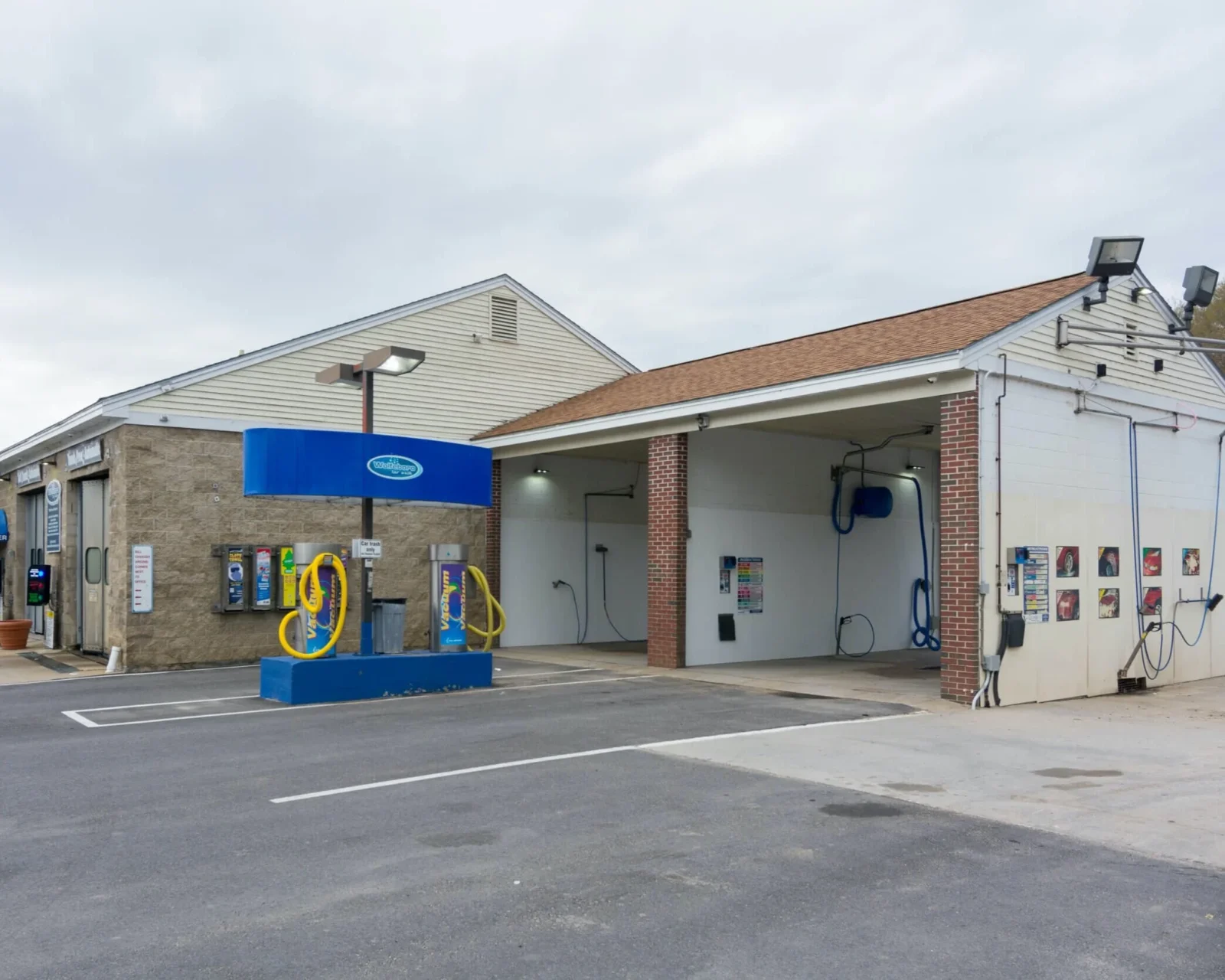
Visit a boat-friendly carwash to rinse your boat hull and trailer with clean water and flush the motor, bilge, live wells, ballast tanks, and storage compartments with clean water per the boat manufacturer’s instructions.