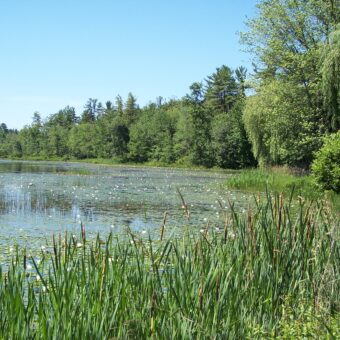
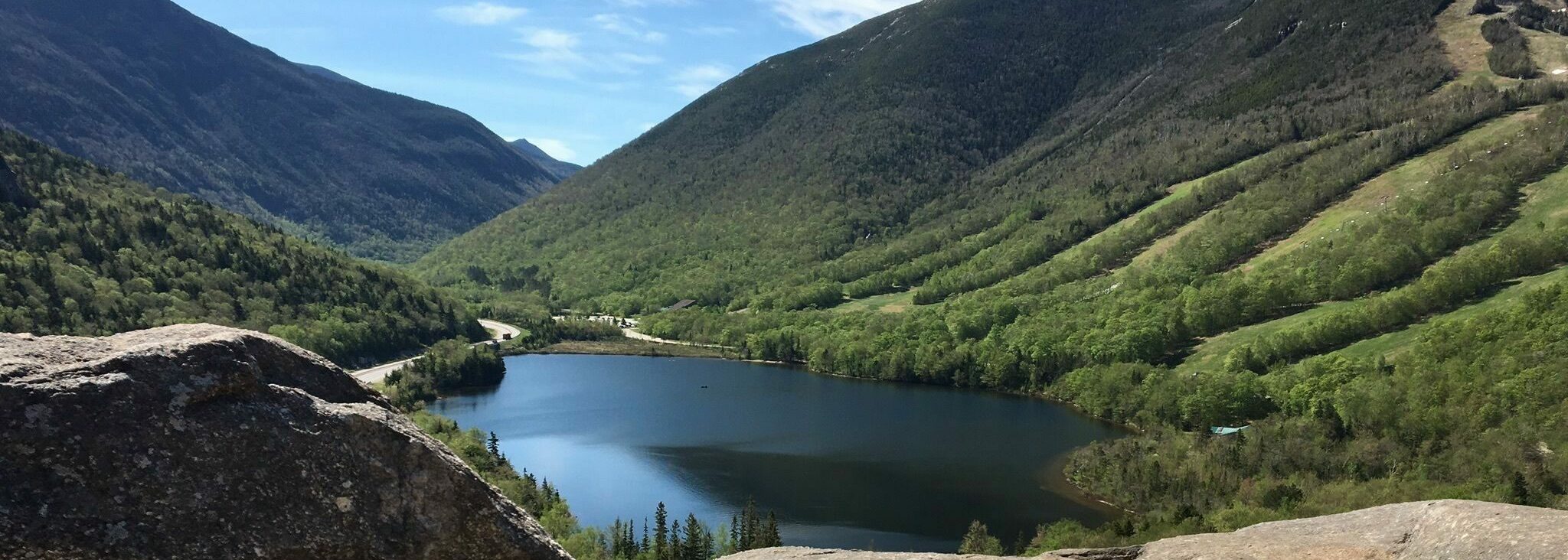
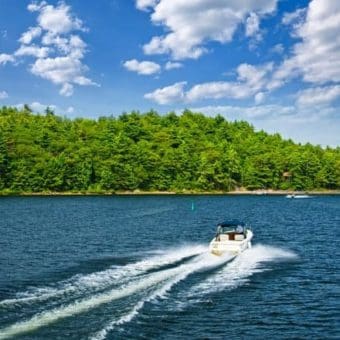
New Hampshire’s lakes are cherished for their beauty, recreational use, lakeside living, and wildlife. Boating on our lakes is a culture shared with friends and a legacy shared with family. Lake-friendly boating rests on five key pillars that protect our lakes and ensure they remain healthy and welcoming for everyone.
By boating in a lake-friendly way, we are:
- Protecting water quality
- Preventing aquatic invasive species
- Protecting shorelines and lake bottoms
- Protecting lake wildlife
- Protecting native aquatic vegetation
Love your Lake. Leave No Trace.
Pillar 1: Protecting Water Quality
New Hampshire’s lakes are naturally low in nutrients. But when excess nutrients, fuel, trash, or other contaminants enter the water, they can disrupt that balance.
Excess nutrients—especially phosphorus—can trigger cyanobacteria blooms that may be toxic to people, pets, and wildlife. These blooms can lead to public health warnings about swimming, contaminate drinking water supplies, harm fisheries, make people and pets sick, and diminish the boating experience.
While out on the water, be mindful of these lake-friendly practices:
Prevent fuel and oil pollution
- Maintain engines regularly to prevent leaks
- Refuel carefully; never top off tanks
- Use absorbent pads during fueling
- Immediately clean up small spills
Choose cleaner technologies
- Use four-stroke or electric motors
- Maintain exhaust systems to reduce emissions
Manage waste responsibly
- Never discharge sewage into the lake
- Use pump-out facilities
- Pack out all trash
- Properly dispose of fishing line and tackle
Reduce runoff water and nutrient inputs
- Avoid washing boats with soap in the lake
- Use phosphate-free cleaning products
Clean water protects swimming, fish habitat, property values, and the boating experience itself.
Pillar 2: Preventing Aquatic Invasive Species
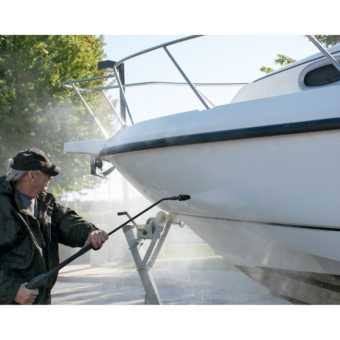
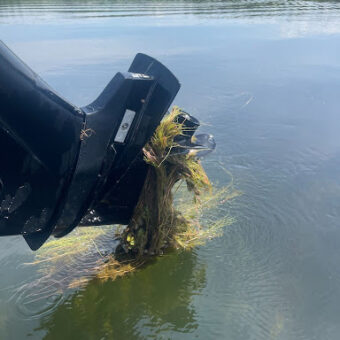
Aquatic invasive species like milfoil, fanwort, zebra mussels, and spiny waterflea threaten lake ecosystems, recreation, and local economies. Once established, they are extremely difficult (and in some cases impossible) to control and costly to manage.
Clean. Drain. Dry. Every time before launching and after coming out of the lake.
Special Considerations for Boats with Ballast Tanks and Bags
- Fully drain ballast tanks and bags
- Follow the manufacturer’s flushing procedures
- Be aware that ballast systems can transport microscopic organisms.
Boaters are the frontline defense. Every launch is an opportunity to protect the next lake.
Pillar 3: Protecting Shorelines and Lake Bottoms
Shorelines and lake bottoms are biologically rich and physically sensitive areas. They filter pollutants, prevent erosion, provide habitat, and help stabilize the lake ecosystem.
Why Distance and Depth Matter
Research shows that boat-generated wakes, pressure waves, and propeller wash can: Erode shorelines, undercut banks, resuspend bottom sediments (increasing phosphorus in the water), and damage aquatic habitat. These impacts are amplified when boats operate too close to shore or in shallow water.
Maintaining adequate distance from shore and sufficient water depth allows wave energy to dissipate and reduces disturbance to the lakebed.
Distance and Depth Recommendations
Recreational Powerboats
Distance from Shore
- Operate at least 150 feet from shore when traveling at speed or producing noticeable wake.
Water Depth
- When operating in planing mode, operate in 10 feet of water or greater.
- When operating in sustained displacement mode (slow cruising), also operate in 10 feet of water or greater.
- When traveling in waters less than 10 feet deep (such as channels or when accessing docks and launches), go as slowly as possible to minimize wake and pressure waves.
Boats Supporting Wakesport Activity
Distance from Shore
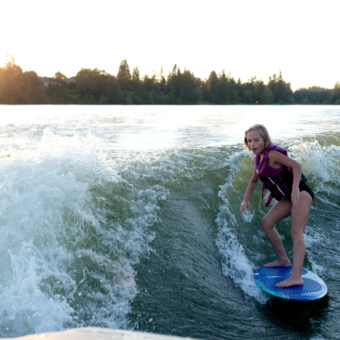
- Operate at least 500 feet from shore when producing surf or wakeboard wakes.
Water Depth
- Operate in 20 feet of water or greater when in semi-displacement (surfing) mode to minimize impacts on the lakebed.
These activities intentionally amplify wave energy to create surfable wakes. Because these wakes are relatively large, greater distance from shore and deeper water are necessary to minimize impacts to shorelines and lakebeds.
Heavily Weighted Boats, Large Pontoon Boats, Large Cruisers
Distance from Shore
- Operate 150 to 500 feet or more from shore, depending on boat size and weight, when traveling at speed or producing noticeable wake.
Water Depth
- Operate in 20 feet of water or greater when in displacement or semi-displacement modes to minimize disturbance to the lakebed and reduce shoreline impacts.
Boats that are heavier and larger displace more water and can generate larger wakes.
Additional Lake-Bottom Friendly Practices
- Avoid anchoring in vegetated areas.
- Use designated moorings where available.
- Trim motors in shallow water to avoid prop scarring.
- Avoid dragging paddlecraft through vegetation beds.
- Avoid producing large wakes in shallow areas.
Distance, depth, and speed work together. Operating farther offshore, in deeper water, and at appropriate speeds protects shorelines, wildlife habitat, water quality, and lake ecosystems.
Use Lake-Friendly Boating Maps and Data
Detailed maps and digital data layers are now available for New Hampshire lakes to help boaters boat in a lake-friendly way.
When integrated into onboard navigation systems or mobile apps, these maps allow boaters to:
- Identify shallow areas before entering them
- Locate deeper-water corridors suitable for higher-speed travel
- Match boating activity to lake size and depth
Knowing your lake’s contours is part of responsible boating. Understanding where deeper water exists helps reduce shoreline erosion, sediment disturbance, and wake impacts.
Technology can support stewardship—and it depends on informed choices by boat operators.
Pillar 4: Protecting Wildlife on Our Lakes
New Hampshire’s lakes support a rich diversity of wildlife, including fish, turtles, eagles, otters, and the iconic Common Loon. The loon is a powerful symbol of our lakes and a conservation success story—yet one that remains fragile.
Wildlife faces many threats, including boat strikes, wake wash that floods shoreline nests, human disturbance near nesting and feeding areas, lead fishing tackle ingestion, and habitat degradation and shoreline development.
Wildlife-Friendly Lake Practices
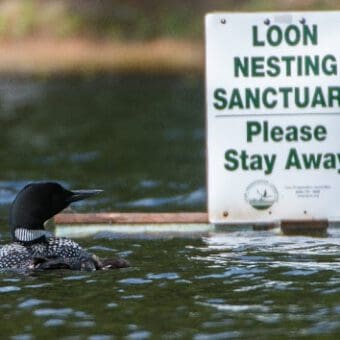
- Slow down near shorelines and shallow coves, especially during nesting season (May–July)
- Stay at least 150 feet from nesting birds and rafted chicks
- Avoid circling, chasing, or approaching wildlife for photos
- Use non-lead fishing tackle
- Follow “no wake” and nesting area signage
Healthy lakes depend on quiet coves, stable shorelines, clean water, and respectful space for wildlife to feed, rest, and raise their young.
Pillar 5: Protecting Native Aquatic Plants
Healthy plant communities support healthy fisheries and clearer water. Native aquatic plants hold shoreline and bottom sediments in place, provide habitat for fish, improve water clarity, compete with invasive species, and absorb wake and wave energy.
Boating can unintentionally damage these communities.
Vegetation-Friendly Practices
- Avoid traveling through dense vegetation
- Lift propellers in shallow areas
Lake-Friendly Boating is a Balanced Vision for Recreation and Protection
New Hampshire lakes support many recreational activities, including family cruising, waterskiing and wakesurfing, fishing tournaments, sailing regattas, quiet paddling, swimming, and wildlife viewing.
Lake-friendly boating means:
- Matching boat size and activity to lake size and depth
- Recognizing that smaller and shallower lakes are more sensitive
- Respecting other users
- Valuing long-term lake health over short-term convenience and enjoyment
Balance matters.