Navigating the Road Salt Challenge at Home: Balancing Safety, Infrastructure, and Environmental Impact
Winter in New Hampshire brings picturesque snowfall but also demands careful management of snow and ice on roads for the safety of residents. The primary tool in this battle is road salt, specifically sodium chloride (NaCl), though its widespread use poses environmental challenges. This blog post explores the impact of road salt, its alternatives, and best practices for managing winter conditions while minimizing environmental harm.
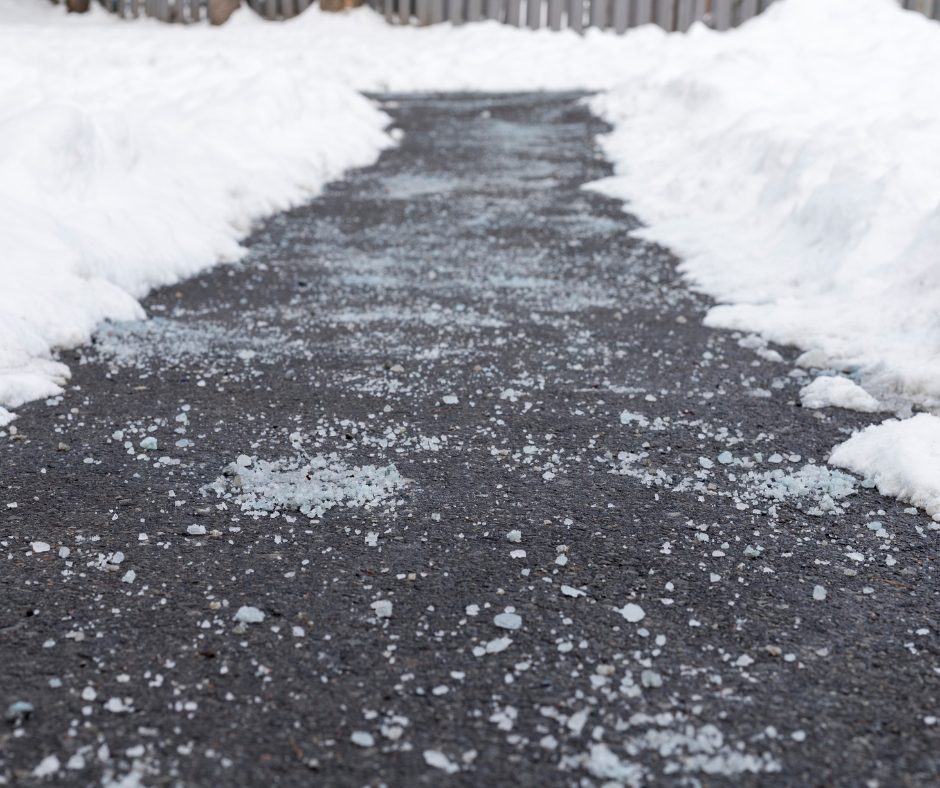
A little goes a long way and this is too much! You really only need a mug of salt (10-12 ounces) to treat a 20-foot driveway before a storm.
The Road Salt Situation
Snow and ice management during New Hampshire winters involves a coordinated effort from the state, municipalities, and the private sector. Sodium chloride, or road salt, is the most commonly used de-icing chemical due to its availability and ease of use.
How Salt Works
Salt lowers the freezing point of ice by forming brine, accelerating the melting process. Road salt is most effective between 15-32°F, necessitating careful consideration of temperature conditions during application.
Environmental Impact of Salt
When applied, salt dissolves into sodium and chloride ions, which have environmental consequences. Chloride is toxic to aquatic life and can contaminate drinking water, while sodium can alter soil chemistry and impact water quality.
What Can You Do?
Use Proactive Approaches to Prevent or Reduce the Need for Salt Usage.
Taking action before or at the beginning of a storm reduces salt usage. Being proactive can save money and help reduce the amount of salt that ends up in our lakes. The most common methods include:
Shoveling early and often: when there’s no snow or ice to remove, no salt or de-icing is needed. Begin removing the snow early in the storm, even before it’s over, so the sun can reach the pavement or ground and melt it away.
Creating and applying a brine solution. Brine is best used before a storm so it can dry on the road or your driveway before snow falls. When the snow hits the dry brine, it immediately starts working to melt the snow. Learn how to make your own.
Using salt 1-2 hours before a storm.
Consider a Road Salt Alternative
Calcium Magnesium Acetate (CMA) is made from limestone and acetic acid (a main ingredient in vinegar). It’s just as easy to use as road salt, and can be applied as both a liquid or solid without the concerning corrosive effects that salt has. While it costs more than regular road salt, it’s less damaging to our lakes (and road infrastructure), costing us less in the long run.
Several non-chemical alternatives to road salt exist. These are best used in smaller areas, like your home entryway or front stairs, and include:
Physical removal, such as an ice chipper or shovel
Wood ash
Sawdust
Pickle brine
Coffee grounds
You can use sand to increase traction, but it should be used sparingly, as it can also have a negative impact on lake health. Learn more about road salt alternatives.
Sometimes, road salt might be the best solution. In these cases, it is essential to use only as much as necessary and sweep up any leftover product to reuse in another storm.
Using a road salt alternative, like wood ash, is better for our lakes and less expensive!
Encourage Salt-Free Behavior
As a property owner, you can promote the New Hampshire Department of Environmental Safety’s Green SnowPro program, which teaches best practices for winter road maintenance and provides liability protection to certified salt applicators.
If you hire a professional for your snow and ice management, ask them if they are a Green SnowPro Certified Professional. If not, you can encourage your current provider to become certified in the latest deicing technologies. Browse a list of Green SnowPro-certified contractors.
Finding a balance between safety, infrastructure preservation, and environmental impact is a collective responsibility. By implementing best practices, exploring alternatives, and adopting proactive measures, we can navigate New Hampshire’s winter challenges while safeguarding our waters and infrastructure for future generations.