Harmful cyanobacteria blooms are becoming an increasing concern in New Hampshire lakes. These blooms can produce toxins that make people and pets sick, contaminate drinking water sources, discourage swimming and other recreational activities, and diminish the appeal of lakefront properties. As a result, they can negatively affect property values, reduce tourism and visitor spending, and impact the local businesses and communities that depend on healthy lakes.
One contributing factor is nutrient pollution—especially pollution carried into lakes by eroded soil and stormwater runoff from roads, driveways, and other developed areas.
To help communities address these sources of pollution, NH LAKES partnered with the New Hampshire Department of Environmental Services (NHDES) in the fall of 2024 to award $400,000 in American Rescue Plan Act (ARPA) funding for lake-protection projects in six New Hampshire communities.
Now, at the end of summer 2026, those projects are complete.
From stabilizing eroding roads and shorelines to improving stormwater management and identifying pollution sources, each project addressed local challenges while helping protect the health of New Hampshire lakes.
Acton Wakefield Watershed Alliance
Reducing runoff pollution around four lakes
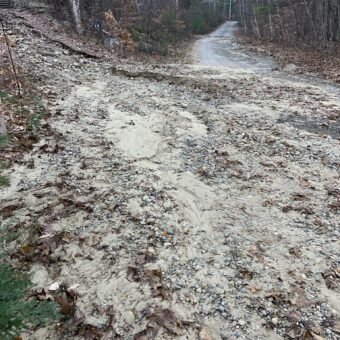
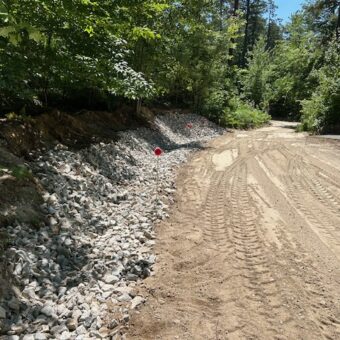
Acton Wakefield Watershed Alliance (AWWA) sent its Youth Conservation Corps to 15 lakefront properties to reduce pollution around Lovell Lake, Pine River Pond, Great East Lake, and Province Lake. Separately, AWWA also fixed erosion on two nearby roads to reduce stormwater pollution to Pine River Pond.
“This grant allowed our organization to rapidly address high-impact pollution sources in our watershed and capitalize on the momentum of a community fighting to protect their lake from cyanobacteria blooms.” Jon Balanoff, Executive Director, Acton Wakefield Watershed Alliance.
Before: Poor drainage allowed stormwater to carry large amounts of rocks and sediment across the road and toward the lake. This runoff clogged drainage systems, damaged roads, and carried pollutants into nearby waterbodies.
After: Improved drainage gives stormwater a safer path off the road, reducing erosion and preventing rocks and sediment from being carried toward the lake. Better road drainage protects both the road and water quality.
Before: Stormwater runoff carried soil and sediment directly into the lake, contributing to erosion and declining water quality.
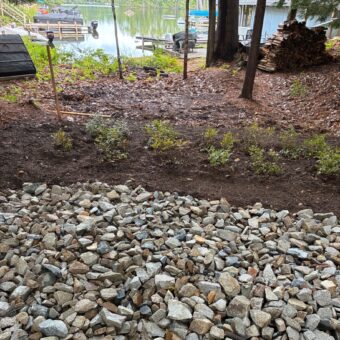
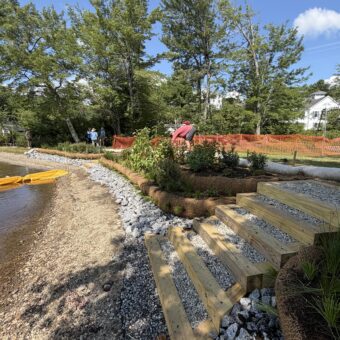
After: Stone drainage and native blueberry bushes help slow, spread, and absorb runoff water before it reaches the lake—capturing sediment and protecting the shoreline and water quality.
Country Pond Lake Association & Town of Newton
Improving stormwater management at Country Pond
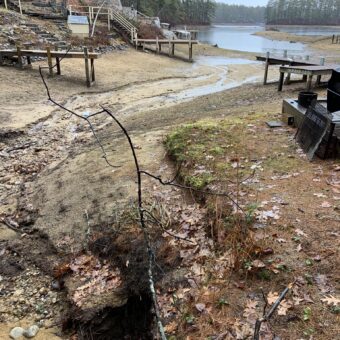
The Country Pond Lake Association, in partnership with the Town of Newton, completed improvements at the town boat ramp to prevent polluted water runoff from flowing directly into Country Pond.
The project also included water quality monitoring, outreach, and education to help the community better understand and address threats to the pond’s water quality.
“The grant was the lifeline Country Pond Lake Association needed to finally get this project done. For nearly five years, we worked toward reconstructing the Newton town boat ramp to reduce phosphorus runoff into Country Pond, but rising costs and design changes nearly doubled our budget along the way. We were able to complete the project quickly, without having to ask Newton taxpayers to approve $20,000 in matching funds.” Greg Senko, Vice President, Country Pond Lake Association
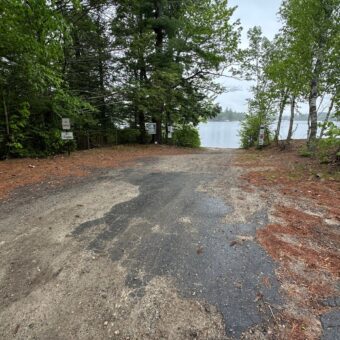
Before: Stormwater carried sediment down the boat ramp and directly into the lake, contributing to erosion and poor water quality.
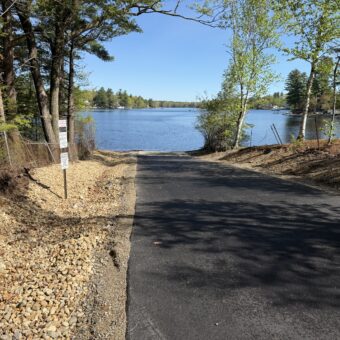
After: Improved drainage along the edges of the boat ramp captures and redirects runoff, helping keep sediment out of the lake and protecting water quality.
Lake Sunapee Protective Association
Addressing shoreline erosion with nature-based solutions
The Lake Sunapee Protective Association worked with the Town of Sunapee and Little Lake Sunapee Protective Association to fix shoreline erosion near Georges Mills Town Beach and Little Lake Sunapee.
The completed work helps reduce the amount of soil and other pollutants washing into nearby waters. The project incorporated native plants to help stabilize shorelines and provide a natural buffer between developed areas and the water.
“It was great to partner with the Town of Sunapee on this water quality improvement project, and I am grateful to all the individuals who volunteered their time to plant nearly 400 native shrubs and perennials. The transformation that occurred over several weeks from an eroded shoreline to one stabilized with plants and a stone support system was very satisfying to see. These measures will prevent additional soil and excessive nutrients from washing into Lake Sunapee.” Geoffrey Lizotte, Lake Sunapee Protective Association, Watershed Director
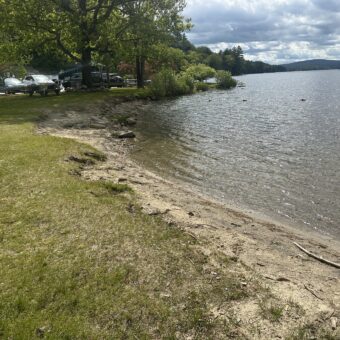
Before: A bare, eroding shoreline with no vegetation to help hold the soil in place.
After: Native plants, a stone trench, and infiltration steps work together to stabilize the shoreline, slow and absorb runoff, and create a natural buffer between developed areas and the water. These simple, nature-based solutions help protect both the property and the lake.
Town of Alton
Reducing stormwater pollution flowing toward Lake Winnipesaukee
The Town of Alton completed road improvements designed to reduce stormwater runoff and keep pollutants from entering Mill Pond, which drains into Lake Winnipesaukee.
By addressing runoff at its source, the project helps reduce the amount of sediment and other pollutants transported downstream during rain events.
“This grant allowed the Town of Alton to continue our commitment to protecting one of our most valuable natural resources while also improving public access to Mill Pond and traffic safety at the Letter S Road intersection. Funding opportunities like this make it possible for communities to protect New Hampshire’s lakes while making lasting improvements for residents and visitors.” Seth Garland, Public Works Director, Town of Alton
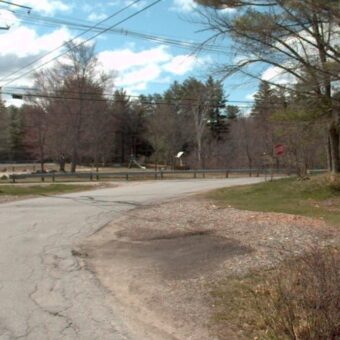
Before: Stormwater runoff from the road flows toward the public access at Mill Pond, carried sediment and caused erosion that impacted water quality.
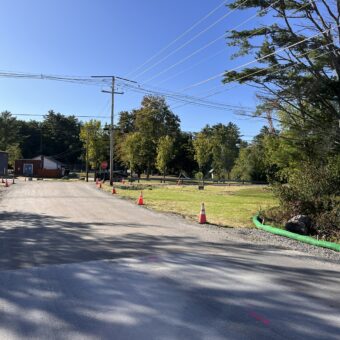
After: Road improvements help slow and redirect stormwater runoff, reducing erosion and keeping sediment from reaching Mill Pond while improving the public access.
Wentworth Watershed Association
The Wentworth Watershed Association completed work to fix stormwater runoff entering Lake Wentworth from gravel roads, with a particular focus on the area near Red Brook Circle.
By improving how stormwater moves across these roads, the project helps reduce erosion and the amount of sediment and nutrient pollution reaching the lake.
“The grant gave the Wentworth Watershed Association the resources to turn one of the highest-priority stormwater projects identified in our Watershed Management Plan into action. With NH LAKES’ support and matching funds from the Town of Wolfeboro and Wentworth Estates residents, we completed a project that slows and infiltrates stormwater, reduces erosion, and prevents sediment and phosphorus from reaching Lake Wentworth. WWA successfully met the water-quality goal established in our first Watershed Management Plan, and on-the-ground projects like this are a big part of how we achieved that success.” Julie Brown, President, Wentworth Watershed Association
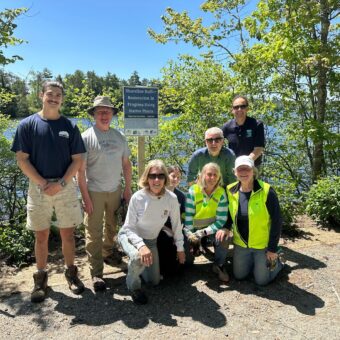
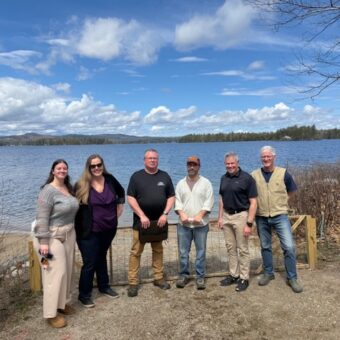
Members of the Wentworth Watershed Association, Town of Wolfeboro, and local community came together to put this important stormwater project into action. Their collaboration is helping reduce erosion, slow and infiltrate runoff, and keep sediment and phosphorus out of Lake Wentworth.
White Oak Pond Association
Identifying pollution sources to guide future action
The White Oak Pond Association completed a Watershed-Based Management Plan for the White Oak Pond watershed.
The plan identifies sources of pollution and provides a roadmap for addressing them. This work gives the community a stronger foundation for prioritizing future lake protection efforts and reducing the pollutants that can contribute to cyanobacteria blooms.
“Thanks to the generosity of NH LAKES, the White Oak Pond Watershed Association was able to embark this year on one of our long-term goals to complete a watershed management plan that will enable us to learn how to best mitigate the cyanobacteria blooms that have plagued our pond for the past few years. We are deeply grateful to NH LAKES for its support and commitment to keeping New Hampshire’s lakes healthy.” Nancy Isikoff
The Town’s watershed management plan provides a roadmap for protecting this beautiful resource, identifying opportunities to reduce stormwater runoff, erosion, and pollution and keep White Oak Pond healthy for years to come.
Local Action for Healthier Lakes
Each of these projects addressed a different local challenge, and they share a common goal: reducing pollution before it reaches New Hampshire’s lakes.
By completing this work, these six communities took meaningful steps to reduce stormwater and nutrient pollution, protect water quality, and help prevent conditions that can contribute to harmful cyanobacteria blooms.
NH LAKES is grateful to the local organizations, municipalities, volunteers, and partners who put these projects into action—and to the New Hampshire Department of Environmental Services for helping make this work possible through ARPA funding.