
Leaves are natural—how can they be considered litter?
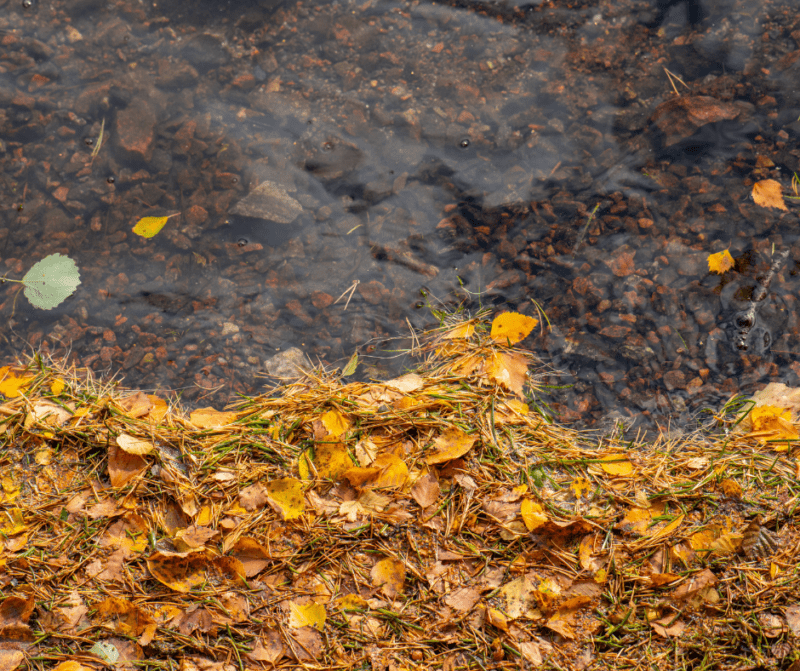
When leaves fall to the ground, they naturally decompose and return nutrients and organic matter to the soil. Leaves that naturally fall into a lake are also part of the lake’s natural cycle, providing organic matter that supports its ecosystem. So, seeing leaves floating on the water or resting on the lake bottom in the fall isn’t necessarily a problem.
The problem is when people add leaves to the lake that wouldn’t otherwise be there. When homeowners or landscaping companies blow leaves directly into the water, or pile them near the shoreline where wind and rain can carry them into the lake, they introduce excess organic matter and nutrients.
Leaves that collect on streets and driveways can also contribute to nutrient pollution. When it rains, nutrients released by decaying leaves wash into stormwater runoff, which eventually reaches lakes.
Unfortunately, too many nutrients in a lake can be harmful. Phosphorus fuels algae growth, including potentially toxic cyanobacteria blooms. As algae and other organic matter decompose, they consume oxygen in the water. Low oxygen levels can harm aquatic plants and animals and even kill fish.
A new law helps protect New Hampshire’s lakes
As of January 1, 2026, New Hampshire law explicitly prohibits dumping yard waste into lakes, ponds, rivers, and streams, or along their banks. This includes leaves, grass clippings, branches, and other yard waste.
The goal isn’t to prevent every naturally falling leaf from reaching the lake. It’s to avoid adding unnecessary yard waste and nutrients to the water.
The good news is that you can help protect your favorite lake by managing fall leaves thoughtfully. Here’s how to turn leaf litter into a resource for your property instead of a source of lake pollution.
Use leaves as mulch: Leaves make fantastic mulch for your lawn and garden. Leave leaves on the lawn to decompose and put that phosphorus back into the soil where it belongs. Add leaves directly on your garden beds to suppress weeds, provide insulation, and nourish tired soil. It’s free, and your trees and veggies will thank you.
Rake leaves onto your lawn before it rains: If you want to go the extra mile, rake the leaves off your driveway and street onto your lawn. According to a study by the University of Minnesota, this could reduce phosphorus in runoff water by up to 60%.
Share your leaves: It’s best to leave your leaves somewhere on your property. We realize some property owners prefer to take leaves off their property, and some municipalities have yard waste and brush drop sites. You can also consider bringing your leaves to your local community garden.
If leaves end up in the lake, don’t use a rake to remove them. If leaves do get into the lake, it is best to leave them there. Raking the bottom disturbs the critters living in and on the lake bottom. Raking in the lake also suspends sediment and phosphorus into the water column, causing violations of state water quality standards and fueling algae blooms.
Keep pollinators in mind: Pollinators use leaves over winter as an insulating shelter to protect themselves from cold and predators. Species like butterflies, moths, and bees overwinter as larvae, pupae, or adults in the leaf litter. By leaving leaves in garden beds or in piles, you provide a crucial habitat that helps them survive until spring. It’s also important to avoid spring cleaning too early. Wait until temperatures are consistently above 50°F before doing your spring cleanup. Many insects will emerge slowly, so waiting ensures they have time to wake up and move on.
By following these tips, you can help prevent leaves from polluting lakes. And turn them into a valuable resource for your lawn and garden. Thank you for doing your part not to let leaves litter lakes.
If you want to learn more about living in a lake-friendly way to ensure the lake you love is restored and preserved, visit our LakeSmart page.