
Every boat that launches into a New Hampshire lake has the potential to carry an unwanted hitchhiker. Aquatic invasive species are plants and animals that don’t naturally belong in our lakes. They can spread from one waterbody to another on boats, trailers, fishing gear, and other equipment. Once established, they can crowd out native species, disrupt lake ecosystems, interfere with recreation, and be costly and difficult to control.
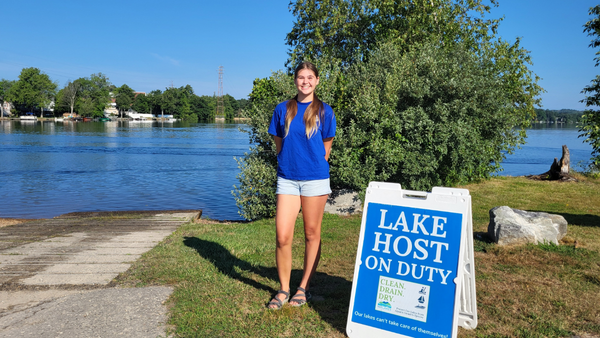
For 25 years, NH LAKES’ Lake Hosts have been on the front lines of preventing that spread. This summer marks the 25th anniversary of the Lake Host Program—a quarter century of inspecting boats, educating boaters, and stopping AIS before they can make their way into another lake.
The 2026 boating season has offered a powerful reminder of why this work matters. So far, Lake Hosts have made 15 confirmed “saves,” finding invasive plants and animals and stopping them from hitching a ride to a new waterbody. Each inspection may seem like a small moment—a quick look at a boat, trailer, or piece of equipment—but it can make a tremendous difference.
These “saves” are more than just a number. They show that Clean, Drain, Dry works and demonstrate the vital role Lake Hosts play in protecting New Hampshire’s lakes. From familiar invasive species to unexpected discoveries, this season has brought plenty of examples of why every boat, every inspection, and every conversation matters.
Here are some of the Lake Host “saves” from the 2026 season so far:
Beaver Lake: Stopping European Naiad From Spreading
Lake Host Paula Studer made two important saves when she found European naiad on two different boats leaving Beaver Lake.
Beaver Lake is one of only a handful of New Hampshire waterbodies already infested with this invasive plant. Preventing European naiad from hitching a ride to another lake is especially important because it can be extremely difficult to manage once established.
Also known as “brittle naiad,” the plant can break into small pieces that float away and take root elsewhere. It also produces seeds that can survive in lake sediments for years. And because European naiad is small and easily overlooked, finding an infestation in a lake early can be challenging.
By catching the plant before these boats left Beaver Lake, Paula helped prevent this aggressive invader from spreading to another New Hampshire waterbody.
Canaan Street Lake: An Unexpected Milfoil Discovery
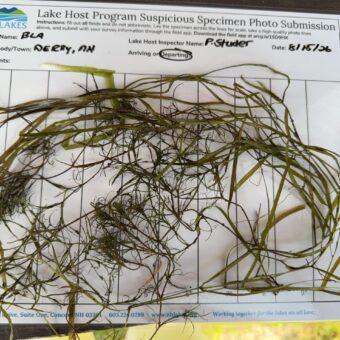
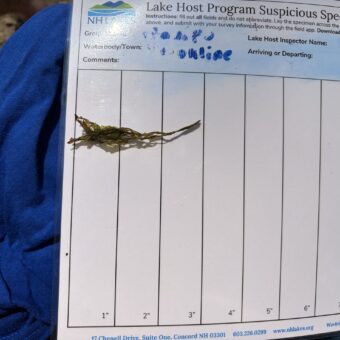
Lake Hosts Maria Clark and Talon Luce found what appeared to be Eurasian watermilfoil on a boat leaving Canaan Street Lake. Something about the plant looked unusual, so they photographed it and shared it with NH LAKES.
Because native and invasive milfoils can look remarkably similar—especially when the plant is young, or the fragment is small—biologists at the New Hampshire Department of Environmental Services sent the specimen out for DNA testing. The results confirmed that Maria had captured a fragment of invasive Eurasian milfoil!
The “save” on the departing boat was surprising because there is no known Eurasian watermilfoil infestation in Canaan Street Lake. Recent surveys did not detect any invasive species in the lake. It’s possible the fragment entered the lake on another boat or trailer and was later picked up by this boat.
Whatever its origin, their careful inspection stopped a potentially invasive fragment from remaining in Canaan Street Lake and possibly taking root.
Lake Sunapee: A First-Year Lake Host Makes a Big Save
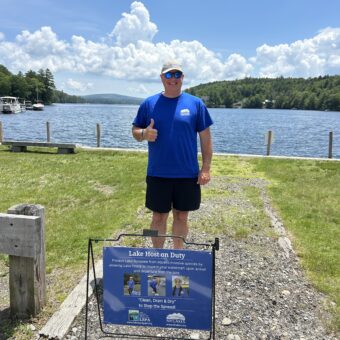
First-year Lake Host John Webster made an important invasive “save” during his very first season at Lake Sunapee.
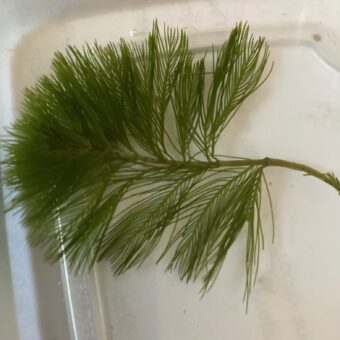
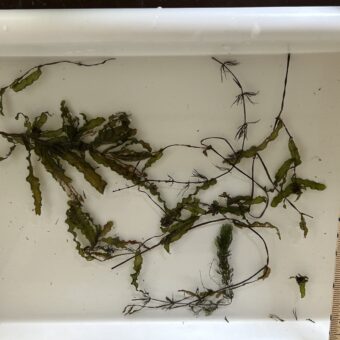
While inspecting a boat arriving at the ramp, John discovered a fragment of curly-leaf pondweed tucked between the boat’s hull and trailer bunk. He removed the invasive plant before the boat entered the water, preventing it from potentially establishing in Lake Sunapee.
John’s save is another example of why every inspection matters—and how even a first-year Lake Host can make a significant difference. Read more about John’s story.
Lake Winnisquam: Catching Spiny Water Flea in an Unexpected Place
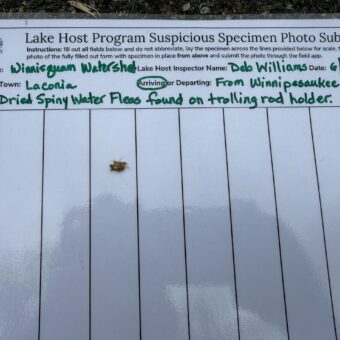
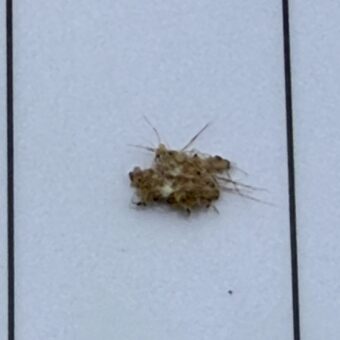
Lake Host Deb Williams discovered a cluster of spiny water fleas attached to a boat’s fishing rod holder after the boat had been on Lake Winnipesaukee.
Both Lake Winnipesaukee and Lake Winnisquam have spiny water flea populations, and this save highlights just how easily these tiny invasive animals can hitch a ride—and how important it is to inspect places that might not immediately come to mind.
Spiny water flea has been confirmed in three New Hampshire waterbodies—Lake Winnipesaukee, Lake Winnisquam, and Newfound Lake—and is suspected in a fourth, Opechee Lake. These large, deep lakes provide ideal habitat for this invasive zooplankton.
Spiny water flea can consume large quantities of plankton, an important part of the food web, and may compete with young fish for food. By finding and removing these tiny invaders, Deb helped prevent them from traveling any farther.
Newfound Lake: Preventing Fanwort From Entering the Lake
NH LAKES Lake Host Aidan Nolan made a major save at Newfound Lake when he spotted dried aquatic plants tangled on a boat and trailer arriving from Robinson Pond.
The plants were identified as fanwort, an aggressive invasive aquatic plant. Aidan removed the plants before the boat entered Newfound Lake, preventing a potential new infestation in one of New Hampshire’s most pristine lakes.
This save is a powerful reminder that invasive species can remain on boats and trailers even after plants have dried out—and that a careful inspection can stop them before they reach a new waterbody. Read more about Aidan’s story.
Northwood Lake: Keeping Variable Milfoil From Leaving the Lake
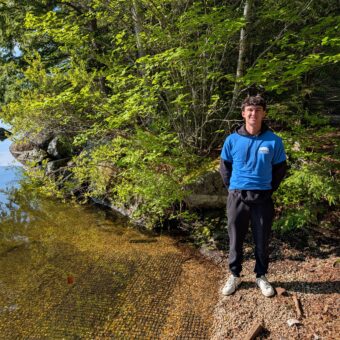
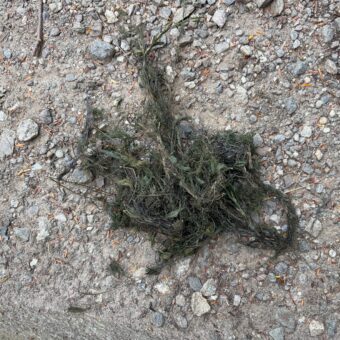
Lake Host Joe Bailey intercepted variable milfoil attached to a boat as it was leaving Northwood Lake.
Northwood Lake is the only lake in Northwood known to be infested with aquatic invasive species.
By finding and removing the plant before the boat left the lake, Joe helped keep variable milfoil from spreading to other lakes in town–and beyond.
Ossipee Lake: Five Variable Milfoil Saves
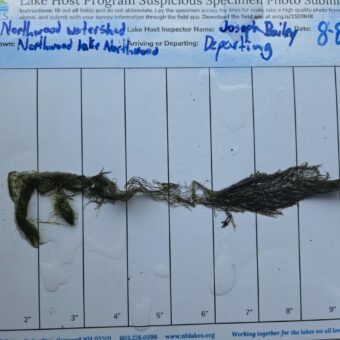
Lake Hosts at Ossipee Lake made five separate saves this season of variable milfoil on boats leaving the lake. All five saves were made by Lake Host Michelle O’Sullivan.
Variable milfoil has infested parts of Ossipee Lake, particularly the Pine River channel that boaters use to access the lake. Because fragments of milfoil can easily break off and travel on boats and equipment, inspecting departing boats is critical to preventing the plant from spreading elsewhere.
Five saves in one season show just how important Lake Hosts are in stopping invasive species before reaching another lake.
Pawtuckaway Lake: Preventing Variable Milfoil From Hitching a Ride
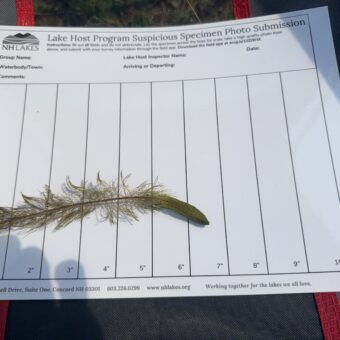
Lake Hosts Karen Given, Brayden McGrath, and Sean Therrien each removed variable milfoil from boats leaving Pawtuckaway Lake. They also intercepted variable milfoil on boats arriving at the lake on two occasions.
Pawtuckaway is one of New Hampshire’s most popular lakes for boating and recreation, and it is also infested with invasive variable milfoil. Communities around the lake invest significant time and resources in managing the infestation and preventing it from spreading to other waterbodies.
Every fragment that Lake Hosts removes is one less opportunity for this invasive plant to spread to another waterbody—and one more lake potentially spared the cost and effort of managing a new infestation.
Potanipo Pond: An Invasive Plant With a Mystery Origin
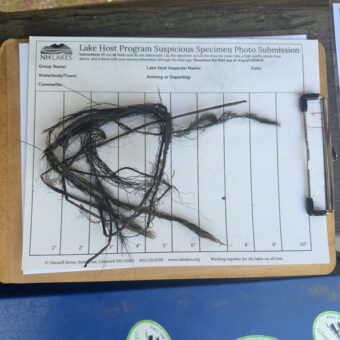
Lake Host Calvin Sarris intercepted invasive curly-leaf pondweed attached to a boat before it was launched at Potanipo Pond.
The boater believed the plant had come from a previous visit in Potanipo Pond, but recent surveys confirmed that the pond is not infested with curly-leaf pondweed. This suggests the plant may have arrived on the boat from another waterbody.
This save is a great example of why Lake Host inspections are so important. Boaters may not always know where an invasive species came from—or even realize they are carrying one. By finding the plant before the boat entered the water, Calvin prevented a potentially new infestation at Potanipo Pond.
The 2026 Lake Host season isn’t officially over until late October, so there’s still time for more saves!
We’ll continue to update this blog as new discoveries are reported. Check back to see how our Lake Hosts continue to protect New Hampshire’s lakes through the end of the boating season.
Every inspection matters. Every conversation matters. And every save helps keep aquatic invasive species from spreading to another lake.