Cyanobacteria
What are cyanobacteria?
Cyanobacteria are some of the earliest inhabitants of our waters. They naturally occur in our lakes, usually in relatively small amounts. However, when nutrient pollution increases in our lakes, the amount of cyanobacteria increases in our lakes.
New Hampshire’s lakes are seeing more and more cyanobacteria blooms. These blooms can produce toxins that make people, pets, and wildlife sick.
What to do if you see or suspect a cyanobacteria bloom:
- Don’t wade, swim, or drink the water.
- Keep kids, pets, and livestock out of the water.
- Anyone (including pets) who comes in contact with a bloom or scum should rinse off with fresh water as soon as possible.
Report It
Use the New Hampshire Department of Environmental Services Cyanobacteria Reporting Form. Include photos, the lake name, and the general location of the bloom.
Perform a Self Risk Assessment
Self Risk Assessment:
1. Visually evaluate the water.
2. Stay informed with the New Hampshire Department of Environmental Services resources.
This video from the New Hampshire Department of Environmental Services provides an overview of cyanobacteria blooms, how to conduct a cyanobacteria risk assessment to determine if it is safe to swim, and how to find information on bloom status in New Hampshire waterbodies and report a bloom.
Know What to Look For
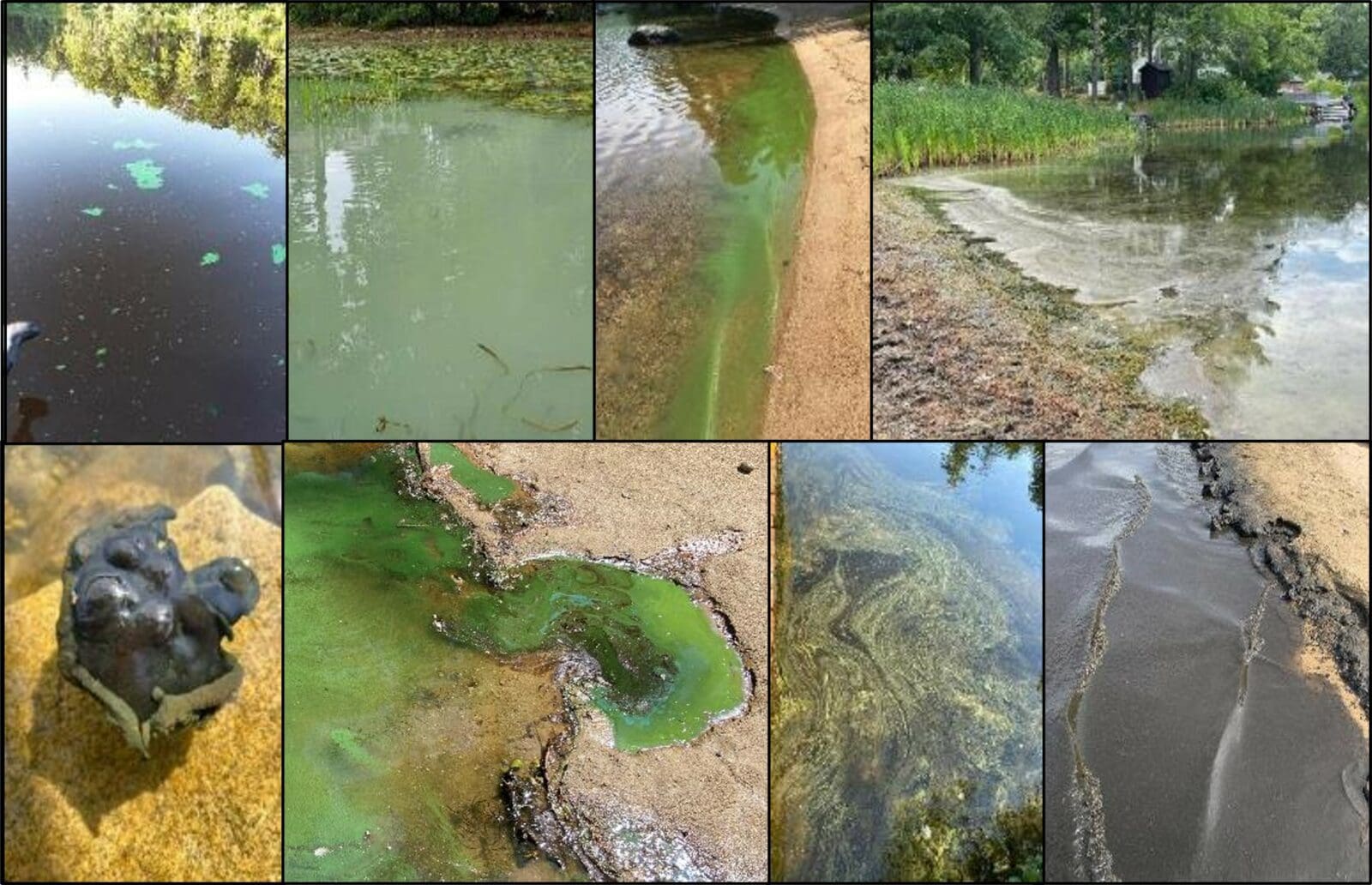
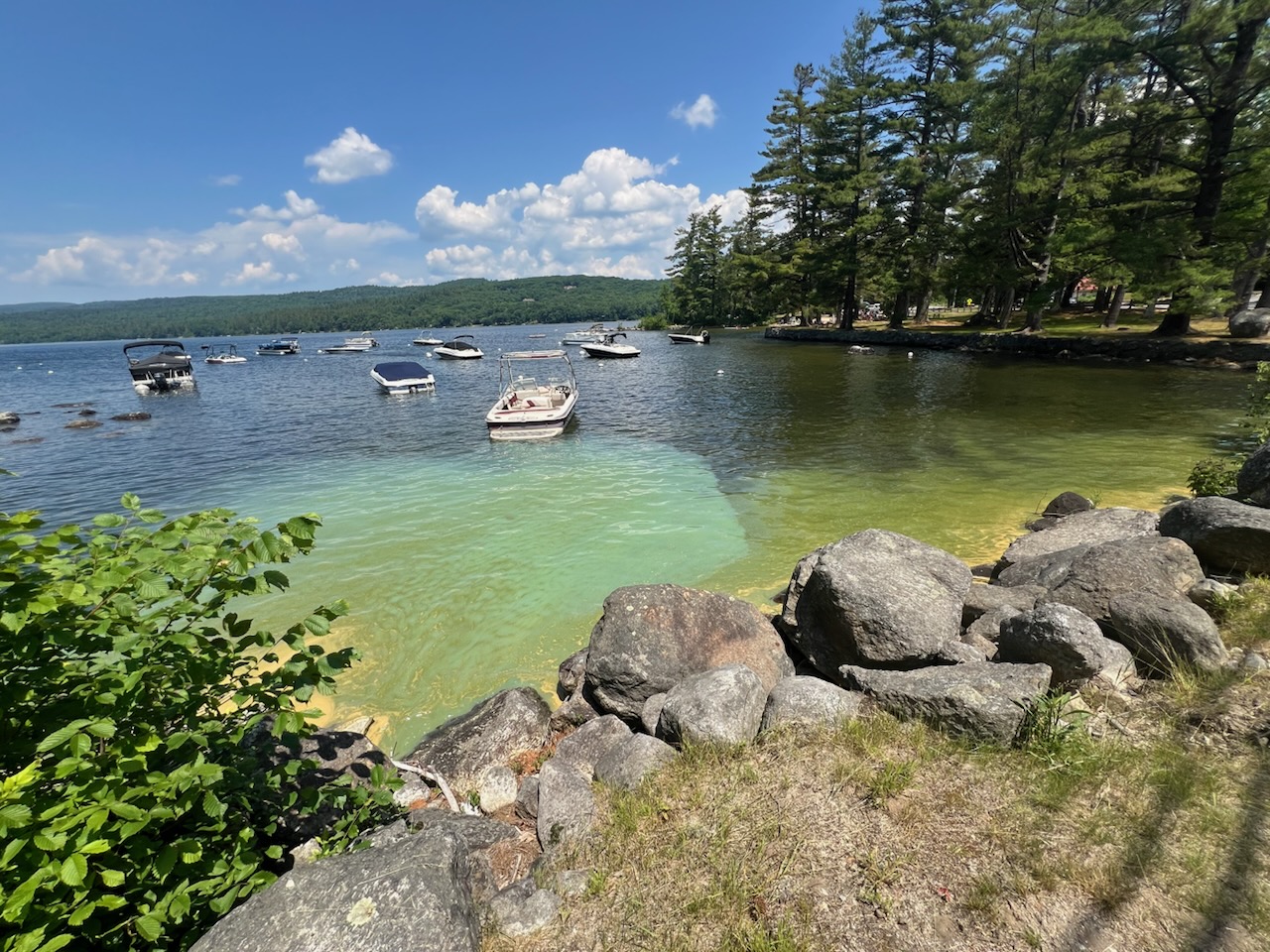
Most of the time, cyanobacteria are present in such small amounts that you won’t notice them, and they don’t cause problems. But under the right conditions, such as heavy rain followed by a few warm, sunny days, they can rapidly form blooms in our lakes.
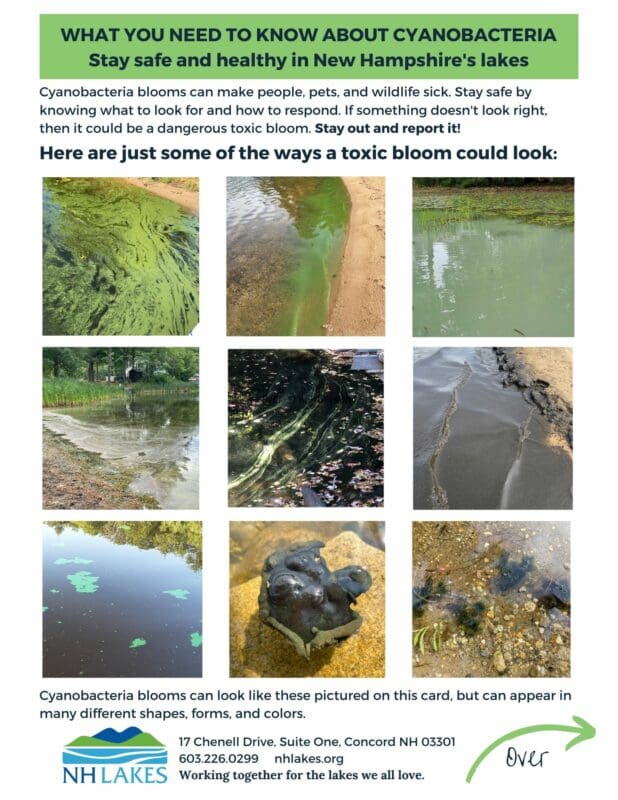
These blooms often collect in coves or along windward shorelines. They can make the water look like pea soup, spilled green-blue paint, antifreeze, cloudy white swirls, or even small yellowish clumps. And each year, scientists are identifying more types of cyanobacteria.
You can’t tell if a bloom is toxic just by looking at it—testing is the only way to know.
We’ve partnered with the New Hampshire Department of Environmental Services to create a simple guide that shows how to spot a bloom, report it, and stay up to date on advisories.
Sign-Up for Cyanobacteria Alerts
The New Hampshire Department of Environmental Services posts public health advisories when fecal bacteria or cyanobacteria counts at public beaches exceed the state standards.
Visit their website to sign up for weekly updates, get waterbody-specific notifications, and view the healthy swimming mapper.
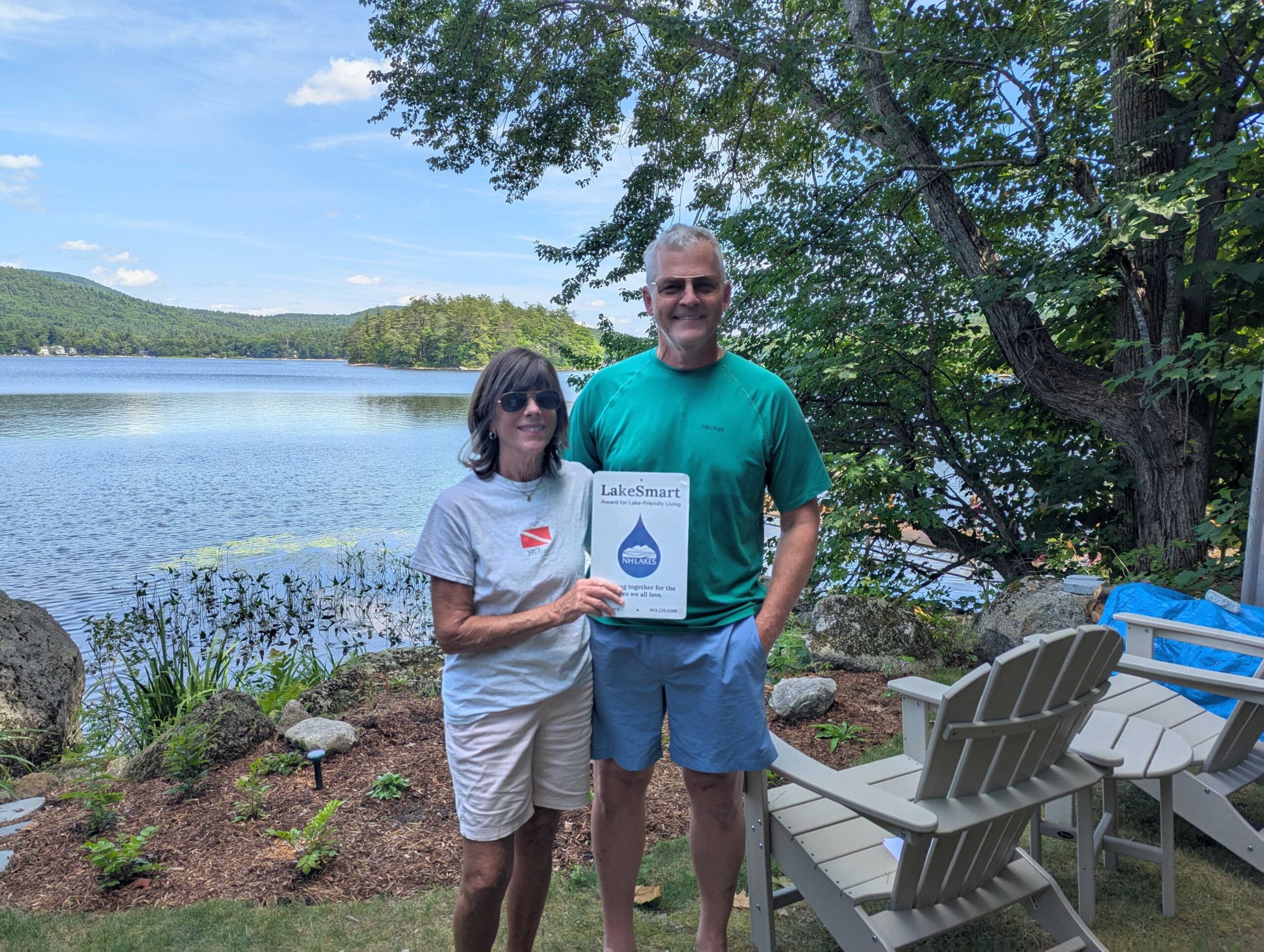
Help Prevent Cyanobacteria Blooms - Participate in the LakeSmart Program
Learn how to reduce the amount of nutrients you contribute to cyanobacteria blooms. LakeSmart is a free, non-regulatory, and voluntary education and award program for property owners to maintain their homes and property in ways that protect lake water quality, wildlife habitat, and property values.