
Ah, the ice on your favorite lake has finally melted, and you may be feeling rejuvenated as daydreams of swimming in the lake fill your head.
After a long winter, the lake is also experiencing rejuvenation. Now that the ice has melted, the lake is no longer sealed off from the atmosphere. The spring winds are helping to mix much-needed oxygen into the oxygen-starved waters, bringing relief to many aquatic organisms that rely on this vital compound. The spring rains are contributing important nutrients, including phosphorus (but hopefully not too much!), that plants and algae, which make up the base of the aquatic food web, need to grow. And, the sun’s intensity is increasing every day, slowly warming up the surface water of the lake.
You won’t have to daydream about your first swim for too much longer—soon the water will be warm enough to tempt even the most hesitant toes. But before summer fully settles in, spring offers a unique and often overlooked window into the life of a lake—a time of transition, renewal, and quiet activity beneath the surface.
The Magic of Spring Turnover
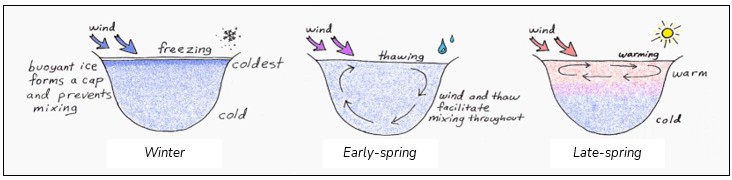
One of the most important processes happening right now is called “spring turnover.” As the surface water warms to match the colder water below, the entire lake becomes nearly uniform in temperature. This allows wind to mix the water from top to bottom, redistributing oxygen and nutrients throughout.
During winter, deeper waters can become depleted of oxygen, especially in lakes with thick ice cover and lots of organic matter. Spring turnover resets the system. Oxygen reaches the depths again, and nutrients that have settled at the bottom are brought back up toward the sunlight—fuel for new growth.
A Surge of Life
As sunlight increases and nutrients circulate, life in the lake begins to surge. Microscopic algae and phytoplankton bloom, forming the foundation of the food web. Zooplankton—tiny drifting animals—soon follow, grazing on these plants and becoming food for small fish.
Fish, too, are becoming more active. Many species move into shallow waters to feed or prepare for spawning. If you stand quietly at the water’s edge, you might notice ripples or flashes beneath the surface—subtle signs of a lake waking up.
Along the shoreline, amphibians return. Frogs call in the evenings, and salamanders may migrate to breeding pools. Aquatic plants begin their growth cycle, sending up shoots that later provide shelter for fish and insects.
The Role of Rain and Runoff
Spring rains play a dual role. On the one hand, they bring essential nutrients that support plant growth. On the other hand, too much runoff—especially from developed areas or fertilized lawns—can lead to excessive nutrient loading. This can fuel large algae blooms later in the season, sometimes with harmful consequences.
It’s a delicate balance. Healthy lakes depend on just the right amount of nutrients, and spring is when much of that balance is set for the months ahead.
A Time for Exploration
For people, spring is the perfect time to reconnect with the lake before the bustle of summer arrives. The air is crisp, the crowds are few, and the landscape is full of subtle changes.
Take a walk along the shore and notice the water’s clarity before algae blooms peak. Watch for returning birds—loons, ducks, and herons—that depend on lakes for feeding and nesting. Bring a kayak or canoe out for a quiet paddle and experience the stillness broken only by wind and wildlife.
Looking Ahead
As the season progresses, the lake will continue to warm and begin to stratify again—forming layers of different temperatures. Summer will bring swimming, boating, and long sunny days. But it all starts here, in spring, with this brief but powerful period of renewal.
So the next time you find yourself gazing out over that newly thawed water, remember: beneath the surface, an entire ecosystem is resetting, rebalancing, and preparing for the vibrant months ahead. And before long, those daydreams of diving in will become reality.