How to keep your lawn and beach clean, the lake healthy, and the waterfowl wild.
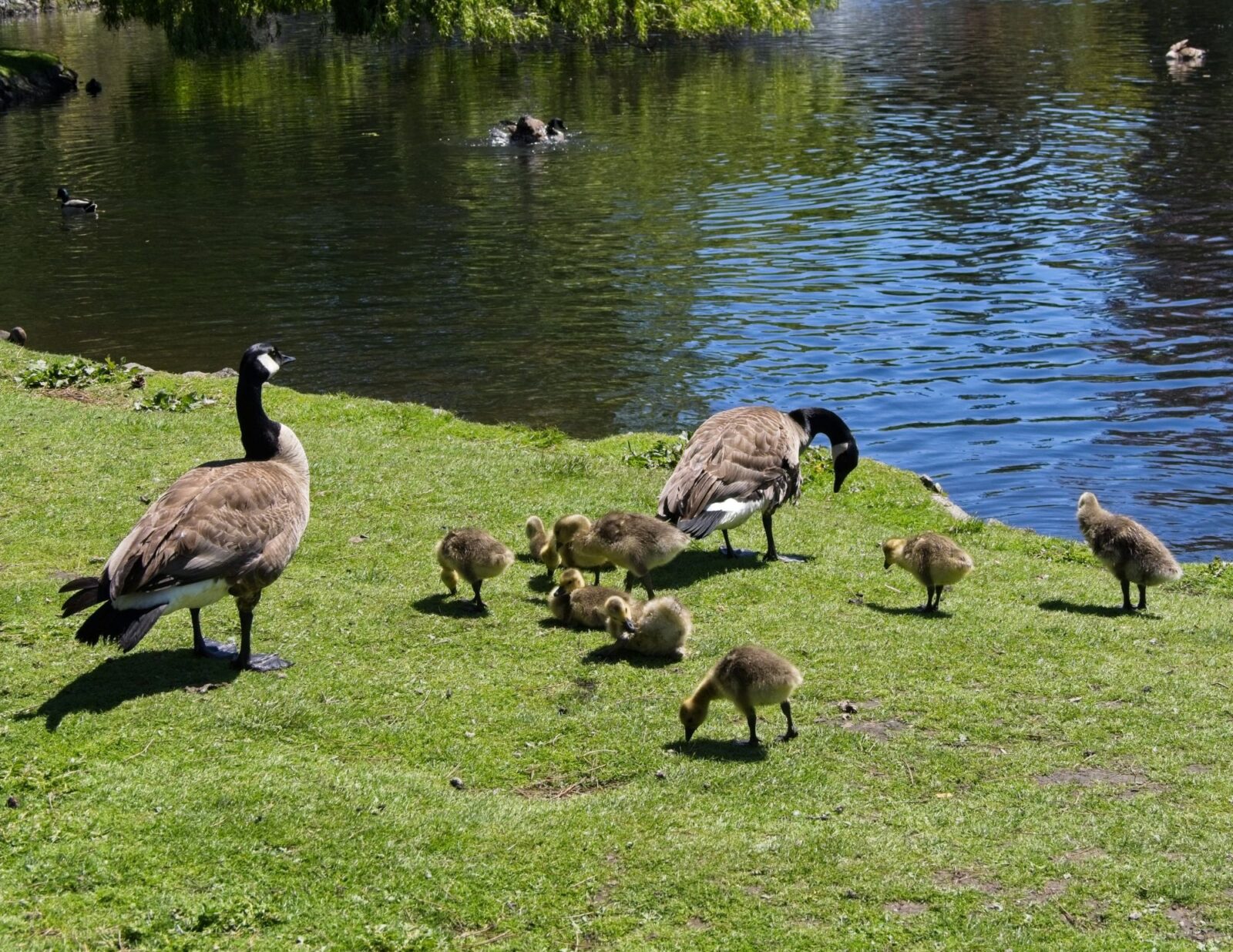
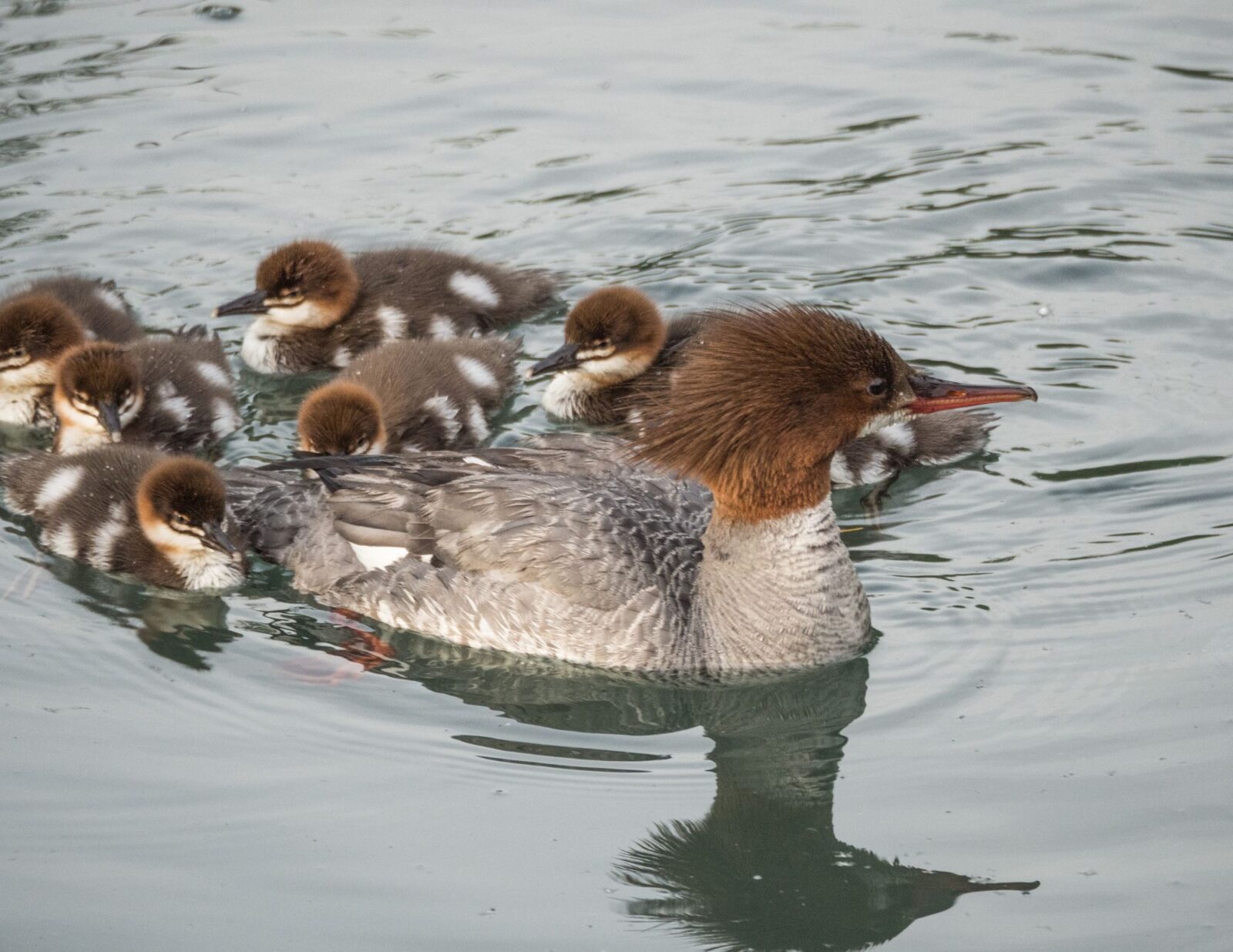
Seeing ducks and geese along the shoreline is a natural part of living on a New Hampshire lake. These common waterfowl spend much of their feeding time in shallow waters, and often come ashore to rest, nest, or raise their young in open areas, including beaches and lawns.
While an occasional visit can be enjoyable, large numbers of waterfowl can pose unintended challenges for our lakes, our lives at the lake, and human health.
An abundance of ducks and geese also means an abundance of their droppings. Waterfowl droppings contain not only bacteria, such as E. coli, but also nutrients, including phosphorus and nitrogen, which can fuel algae and cyanobacteria blooms in lakes. High concentrations of waterfowl can also increase the risk of swimmer’s itch, an itchy rash caused by a parasite associated with waterfowl and aquatic snails.
Fortunately, there are a few simple ways you can discourage waterfowl from gathering on your property.
Create a Barrier
One of the most effective ways to discourage geese and ducks is to install a barrier that creates a physical and visual obstacle they must navigate or avoid.
Temporary Barriers: Rope, line, or fencing strung between stakes–especially with shiny or brightly colored material attached–can discourage waterfowl in the short term. However, these barriers require annual installation and regular maintenance, as they can be damaged by other wildlife or storms.
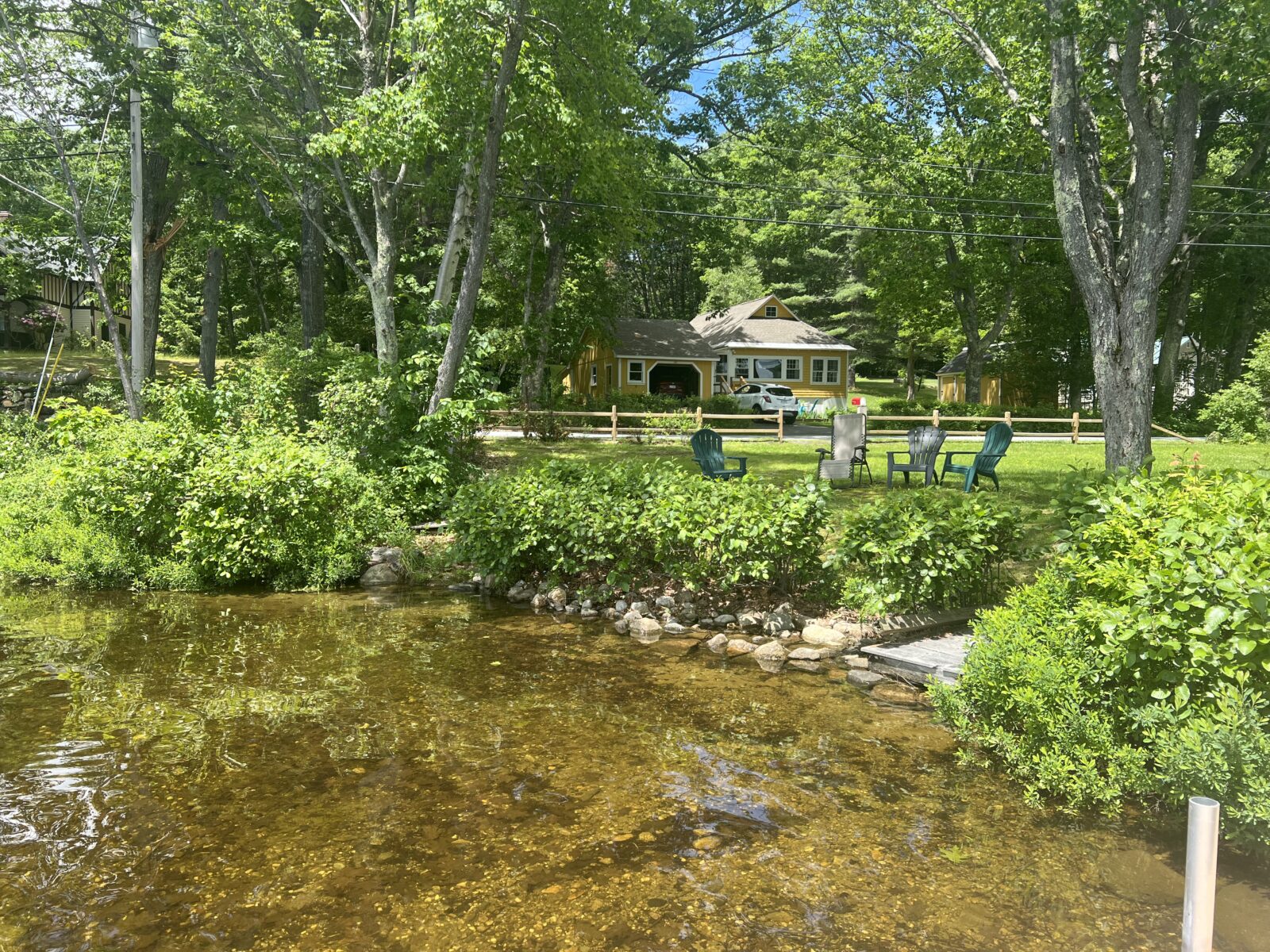
Natural Barriers: Native perennial plants (plants that come back each year) and woody shrubs can help limit waterfowl access to your property while supporting a healthier shoreline. Dense shrubs such as highbush blueberry, serviceberry, or buttonbush will help deter waterfowl. These woody shrubs are easy to prune or limb, which means you can maintain your view and access to the lake as well!
Never Feed Waterfowl
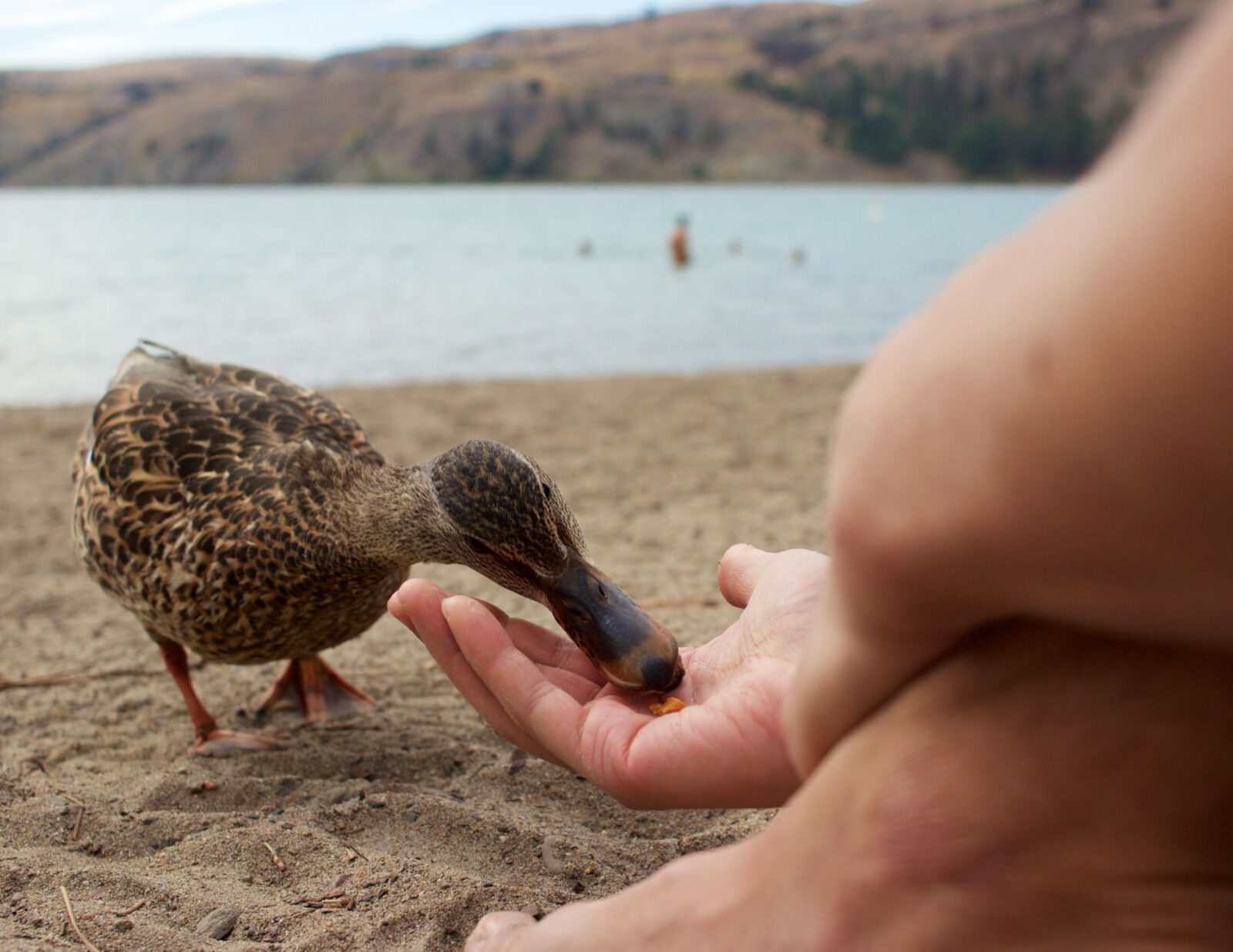
Feeding ducks and geese may seem harmless. Unfortunately, it is one of the biggest reasons large populations of waterfowl thrive at lakes.
When waterfowl receive food from people, they learn to associate humans with handouts, which attracts an increasing number of waterfowl over time.
Human foods, such as bread and crackers, provide far less nutrition than the plants, seeds, and aquatic organisms that waterfowl eat naturally. Feeding ducks and geese can make them more susceptible to disease and illness. Leftover and rotting bread can attract rodents and other pests, while decaying food adds nutrients to the water that can contribute to water quality problems and endanger our well-being.
Feeding ducks and geese can make them more susceptible to disease and illness.
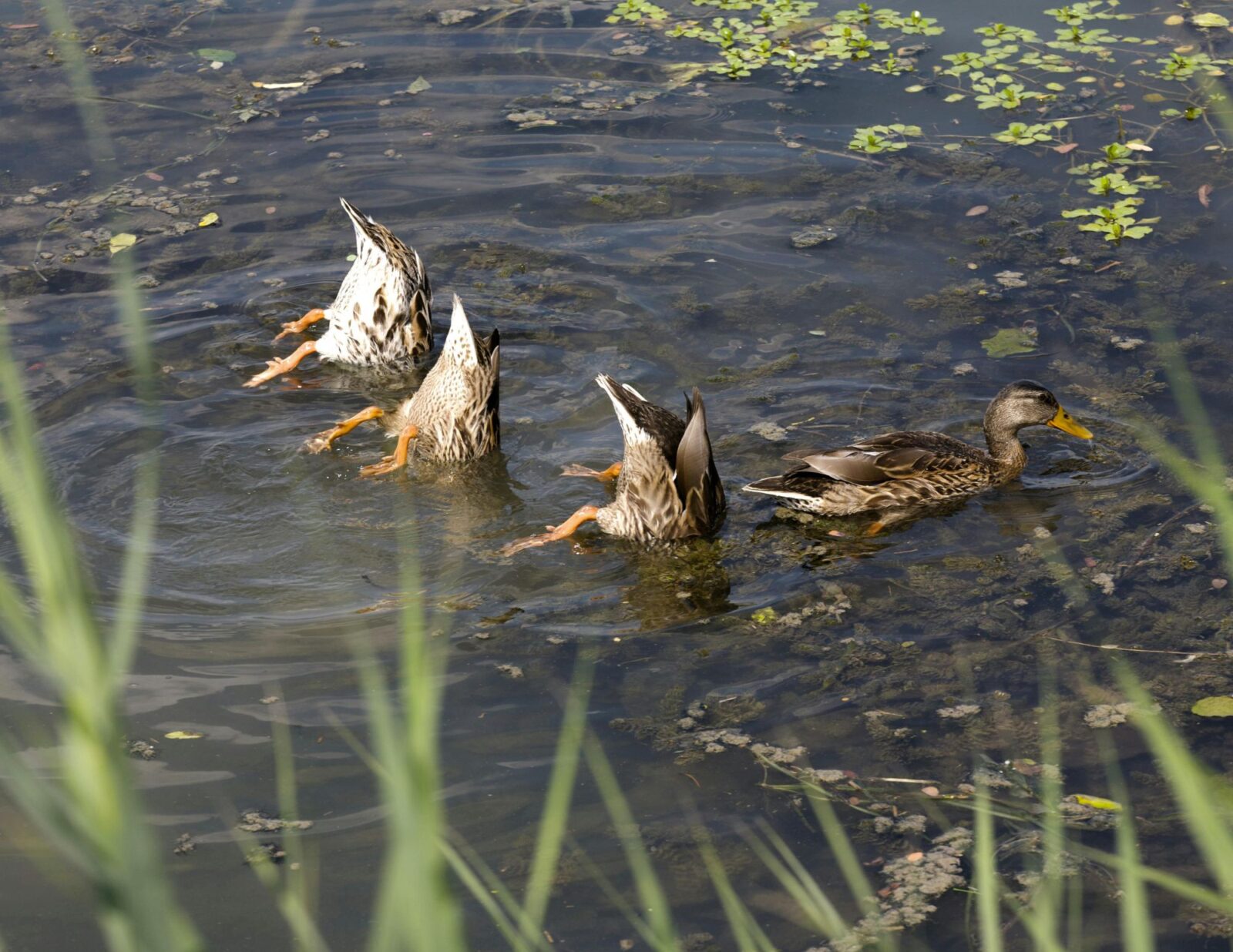
Ducks should eat their natural diet because it provides the exact balance of proteins, vitamins, and minerals they need.
Allow the Lake to Freeze in the Winter
Dock bubblers, also known as de-icers, are used on some lakes to protect dock and shoreline structures from winter ice damage. While these systems can be effective when needed, if used improperly, they can create large areas of open water. These open-water areas attract ducks and geese by providing access to food and refuge that would otherwise be covered by ice.
When waterfowl find reliable open water, they may remain in the area longer than they naturally would, increasing the amount of droppings (nutrients) deposited in the lake and promoting a larger population there.
If you use a bubbler or de-icer, limit the area of open water your system encourages:
Remove all seasonal structures from the water and shoreline.
Install the bubbler on your permanent dock later in the season, after ice has begun to form and the risk of ice damage increases.
Use a timer and thermostatic control so the system operates only when the weather conditions warrant it.
Adjust the airflow or pump output to reduce the area of open water around the structure.
Position the diffuser heads closer to the structure rather than dispersing air across a large area.
Ducks and geese are an important part of life at New Hampshire’s lakes. The goal isn’t to eliminate them–it’s to encourage a healthy relationship with our wildlife populations.